
Generative Art · Data Visualization · Front-End
Latent
Exploration
A genealogy of recursively generated media.
I started with one generated clip, created descendants from it, then repeated the process until hundreds of outputs formed a branching lineage. Instead of presenting them as a gallery, I built an interactive family tree for tracing ancestry, divergence, and the creative paths between them.
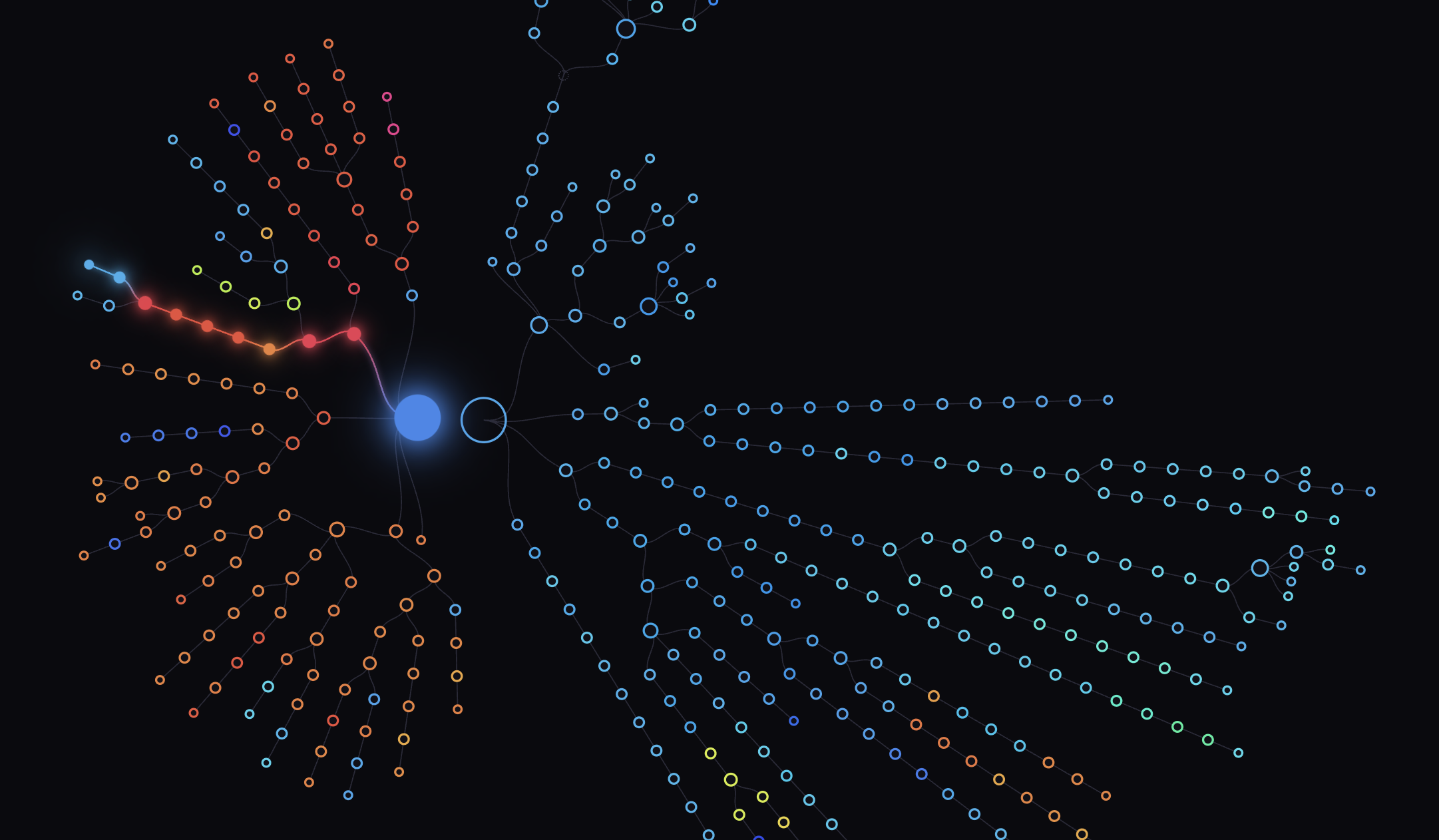
Two origins. 430+ descendants. Every edge records an actual parent-child relationship.
The premise
I started with one generated video, chose outputs from it, and fed those back into the next round of generation. Pretty quickly, the clips stopped feeling like isolated artifacts. They had parents, siblings, cousins, and descendants.
Once there were hundreds of them, the interesting problem was no longer generation. It was representation: how do you make ancestry, divergence, and evolution visible?
Instead of building a gallery of final outputs, I built a family tree — a way to see not just what was generated, but the paths that produced it.
There is still no plot. There is still no camera. The folder is still enormous.
A taste of the chaos
Same parent.
Four possible futures.
These four clips all came from the exact same source. They’re not four unrelated outputs — they’re siblings, sharing one parent and immediately diverging into four different visual directions. This is the basic unit of the whole project: one moment becoming several possible trajectories.
One branch point, recursively repeated.
The diagram is abstract. The nodes aren’t. Here’s what those first four child nodes actually contain.
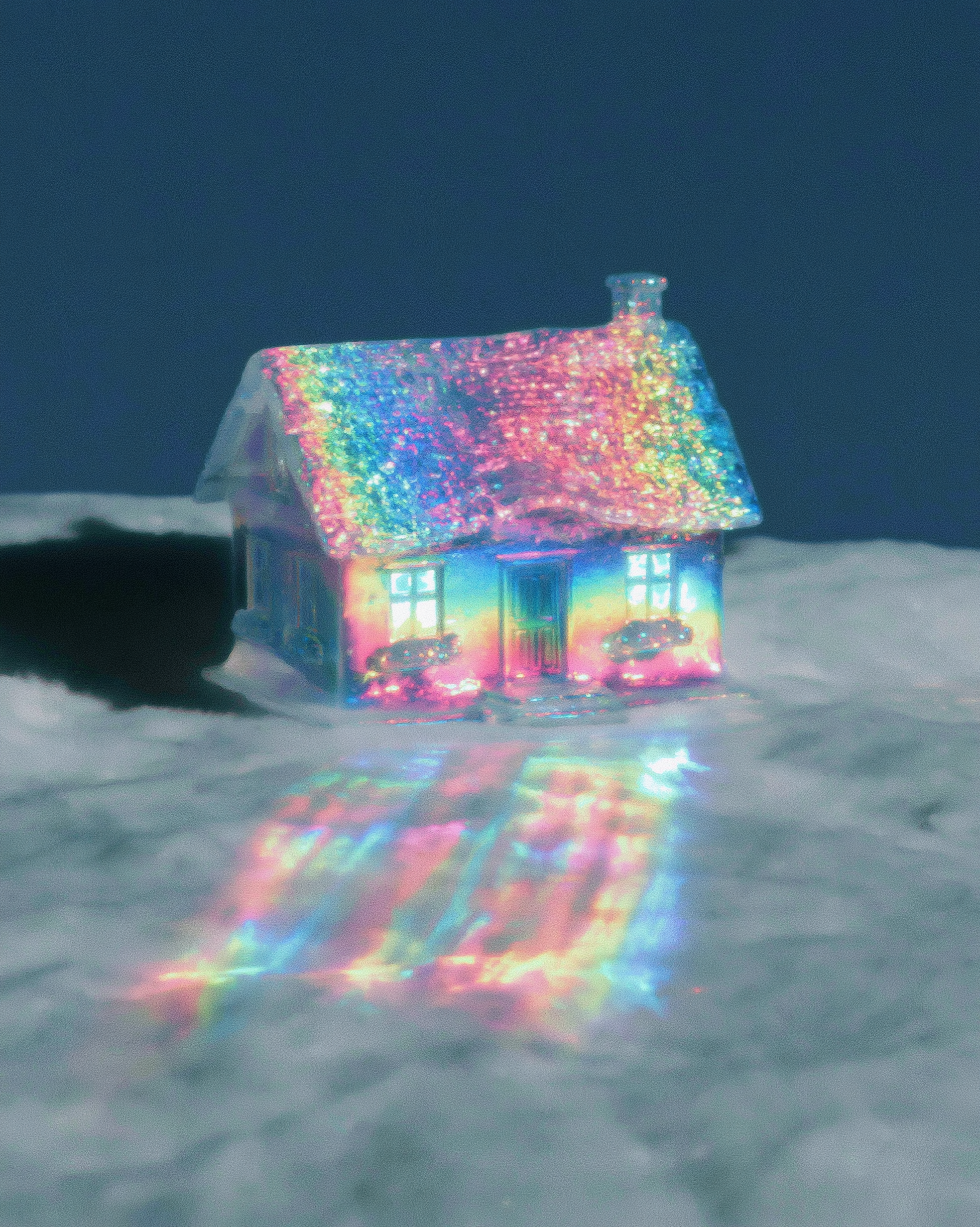
Parent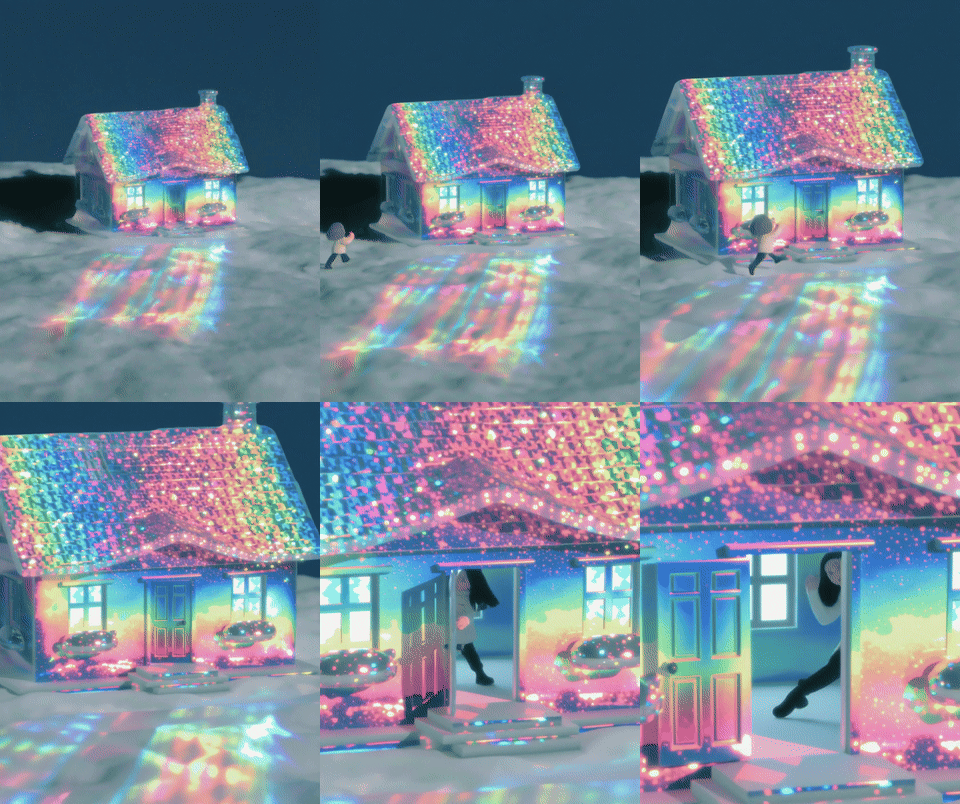
Branch 1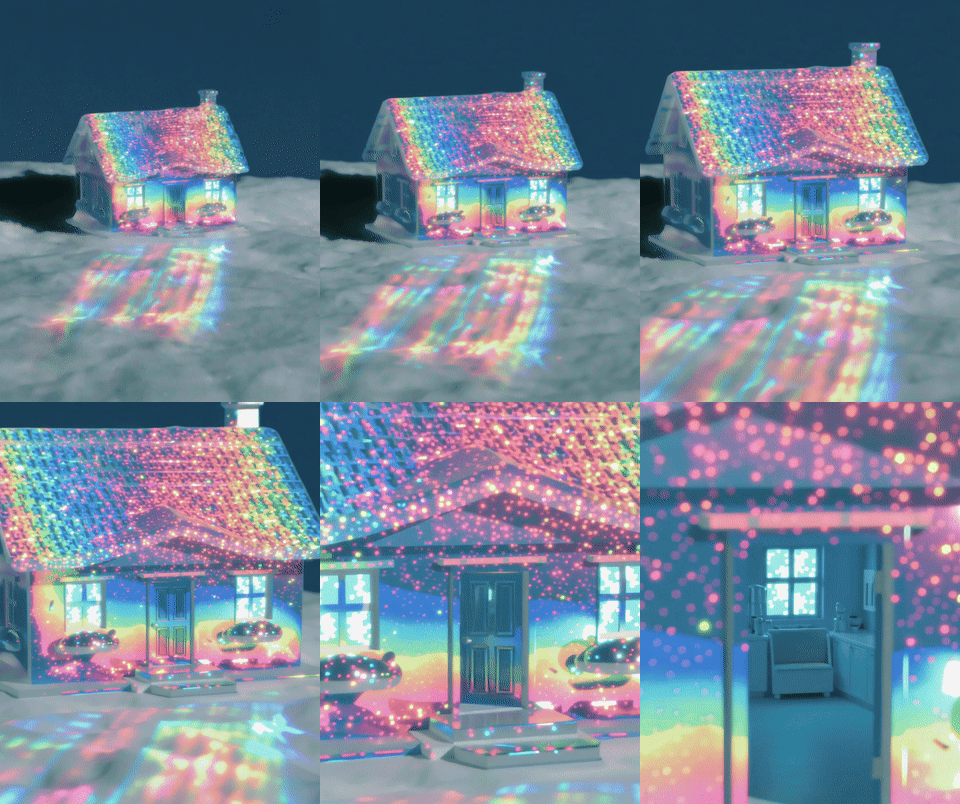
Branch 2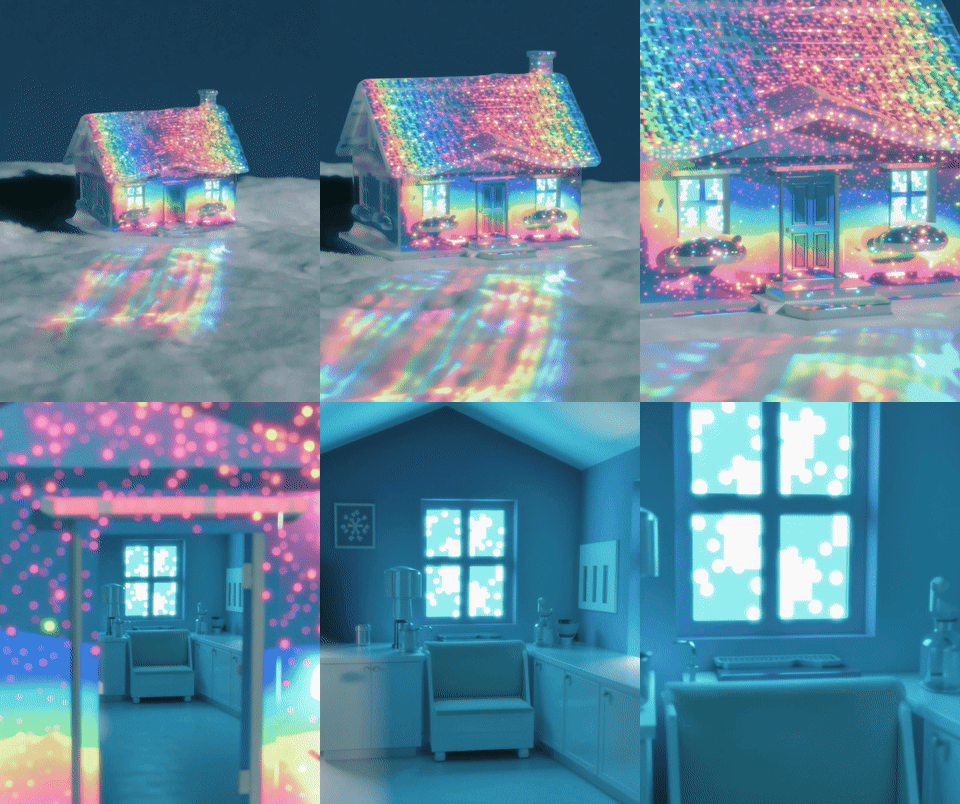
Branch 3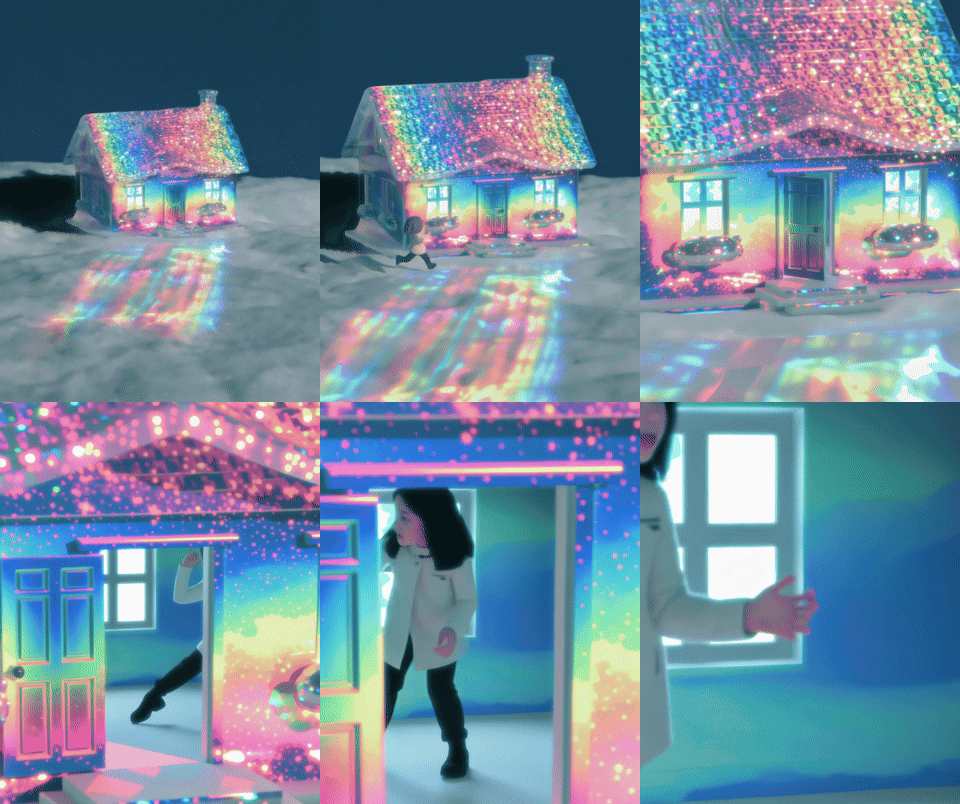
Branch 4How the tree works
The whole genealogy is hiding
in the filenames.
The family tree isn’t something I drew afterward. Each clip’s filename is its ancestral path — a breadcrumb trail from the origin through every generation that produced it.
Read left to right, and the path leads all the way back to the origin.
The filesystem isn’t just storing the project. It describes the genealogy.
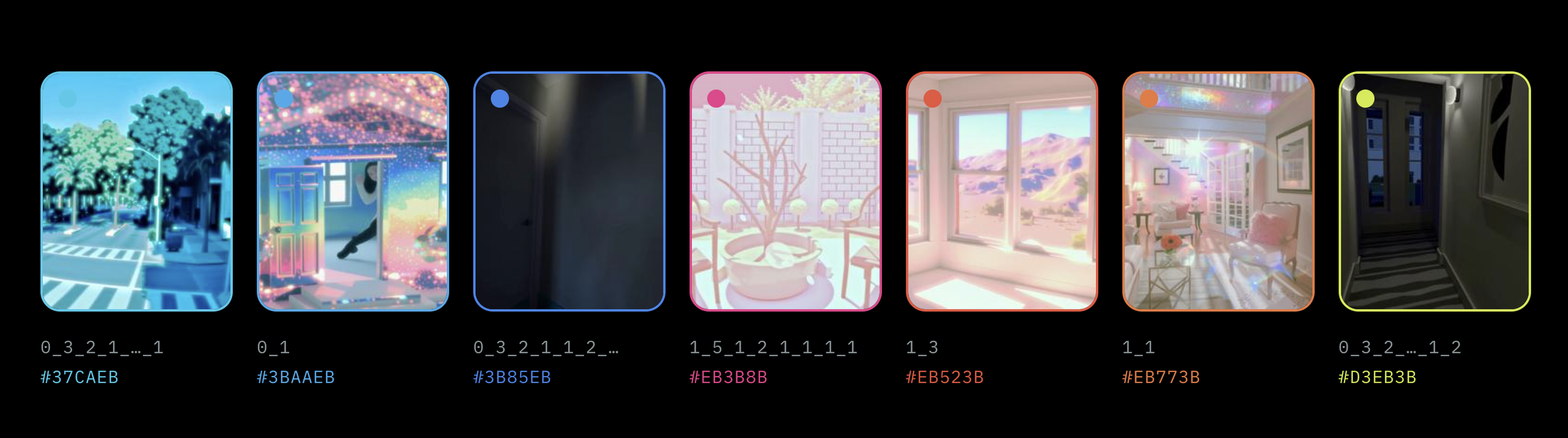
Color from the clip itself
Color is another layer of data. Each node gets its ring and glow from a dominant color extracted from the clip it represents, so the map’s palette emerges from the media itself.
For legibility: saturation and brightness are boosted before display, so the hue comes from the clip while the intensity is adjusted for the dark interface.
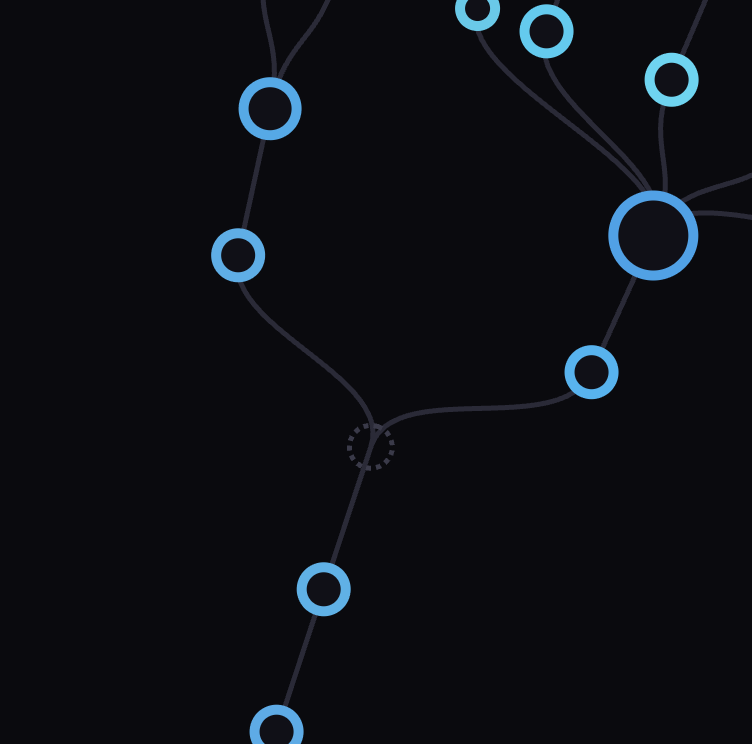
Ghost nodes
Sometimes the lineage has a missing ancestor: descendants exist, but the clip they branched from does not. Instead of breaking the family tree, the build inserts a virtual node to preserve the relationship.
Two ways to get lost
Flatten the lineage.
Or fall into it.
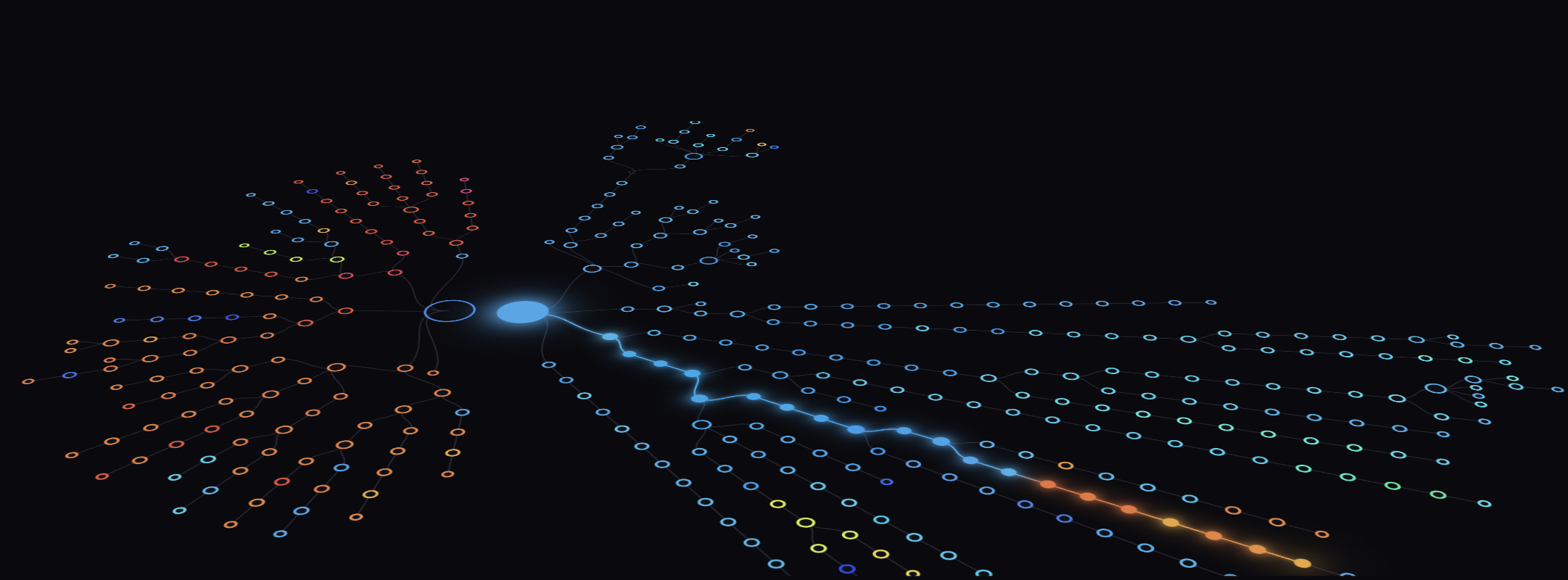
One toggle switches between two views of the exact same genealogy. In 2D, the 433-node tree becomes a radial map that makes branching relationships easy to scan. Tilt it into 3D, and those same generations recede into depth.
The data never changes — only the way you perceive distance, branching, and generational depth. In either view, hover a node and its path back to the origin lights up.
At the center
Every lineage starts somewhere.
The two large glowing nodes are the original images that started each cascade. Every other clip descends from one of them. Click either origin to reveal The Original Image itself.
2 origins · 433 descendants · many possible futures
Origin image 0: Where the first cascade began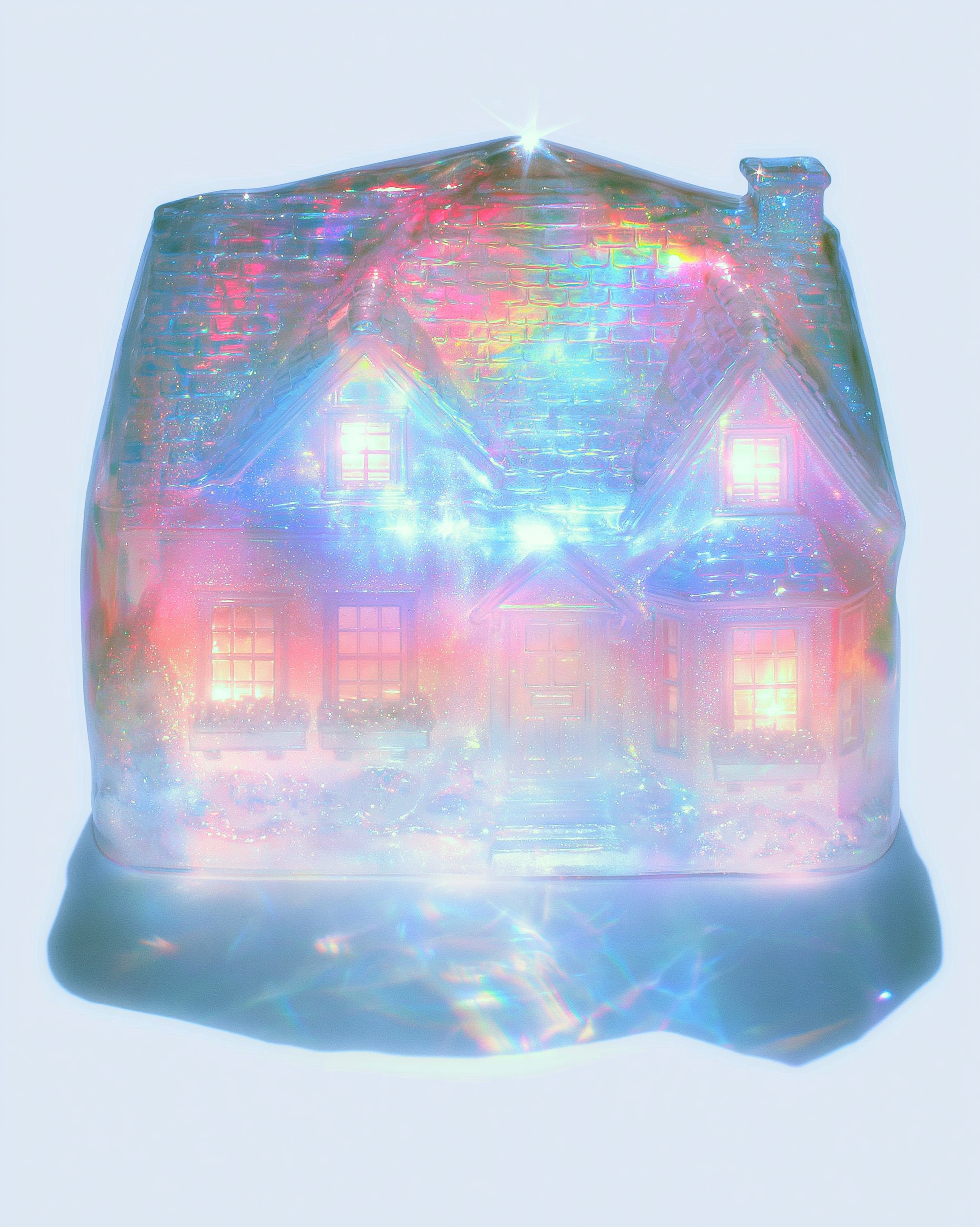
Origin image 1: Where the second one didThe artifact is the process
The videos are outputs.
The lineage is the artifact.
Generative work is often presented as a gallery: here are the images, here are the videos, here are the favorites. But after hundreds of recursive generations, I became less interested in any one finished clip.
I became interested in the paths between them — how one visual state became another, how siblings diverged, which traits persisted, and how repeated choices accumulated into long trajectories. The model generated the possibilities; I chose which branches kept growing.
Generation is automated. Selection is not.
The map doesn’t just show what was generated. It shows how one possibility became another.
Under the hood
A static site that refuses to be complicated.
The interface stays lightweight because the structure already exists in the media. The filesystem stores the clips, the filenames describe their ancestry, and the build turns that lineage into something the browser can explore.
Add a properly named clip, rerun the build, and the genealogy grows with it.
Concept art
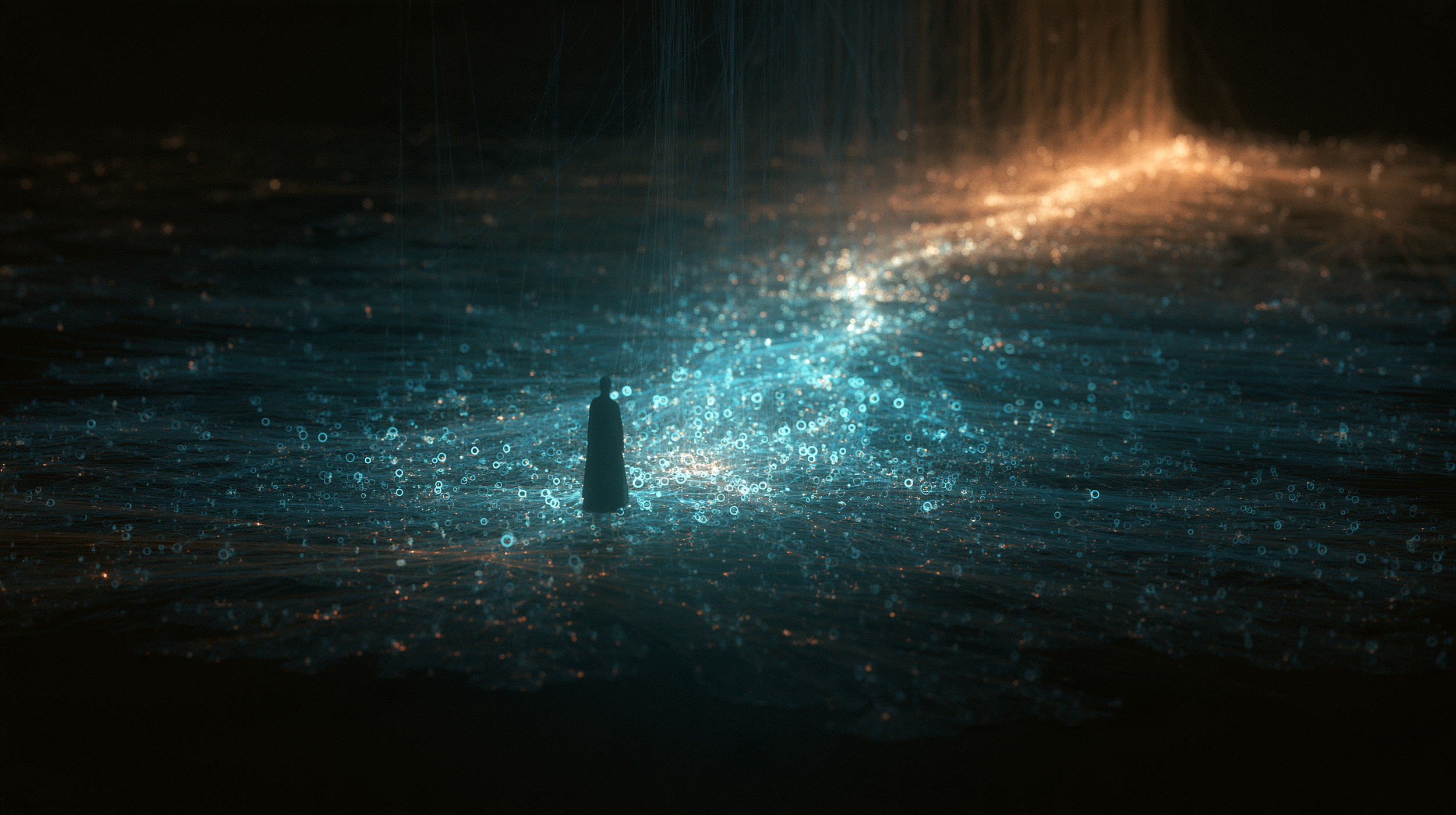
The lineage, dreamed as a galaxy.
After spending long enough thinking about this project as a genealogy, I wanted to see what the same structure might feel like as a place rather than a diagram. The branching tree became a field of light: two origins at its center, descendants radiating outward, and individual paths disappearing deep into the larger system.
Not another data view — a visual metaphor for the same structure. And yes: Midjourney, once again.


In conclusion
I stopped seeing outputs as isolated artifacts. I started seeing them as trajectories.
The interesting object wasn’t any one clip. It was the lineage.
A sequence of choices, divergences, inherited visual traits, and possible futures. Latent Exploration became an experiment in making that hidden structure visible and navigable — so the path between outputs could become as meaningful as the outputs themselves.