Stanford ARTSTUDI 163 · Drawing With Code · Spring 2024
Vessels of Memory
If Pillars of Memory examined how digital photos slip through our fingers, Vessels of Memory asks the opposite: what happens when those fragile, binary memories become solid, heavy, and undeniably real?
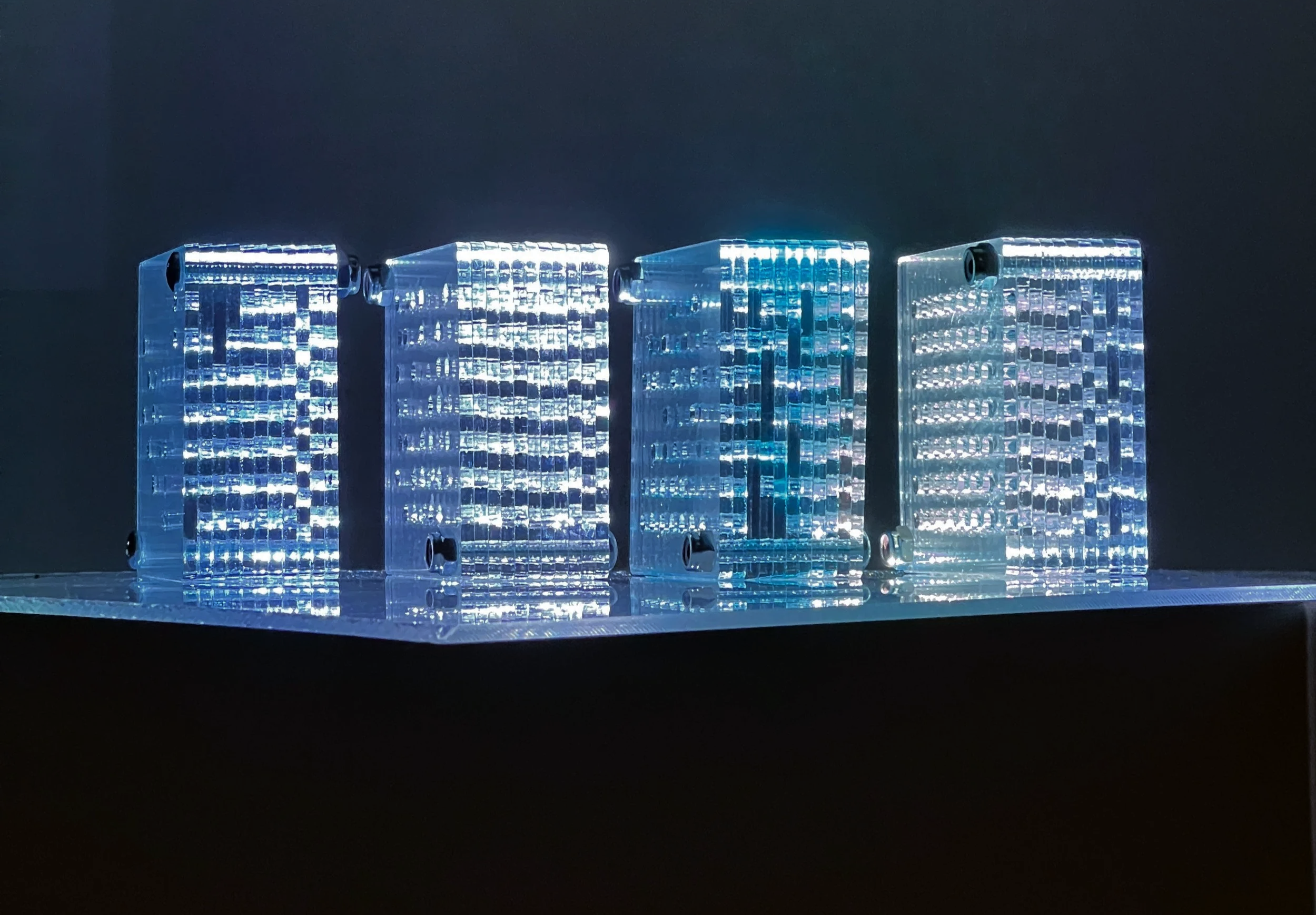
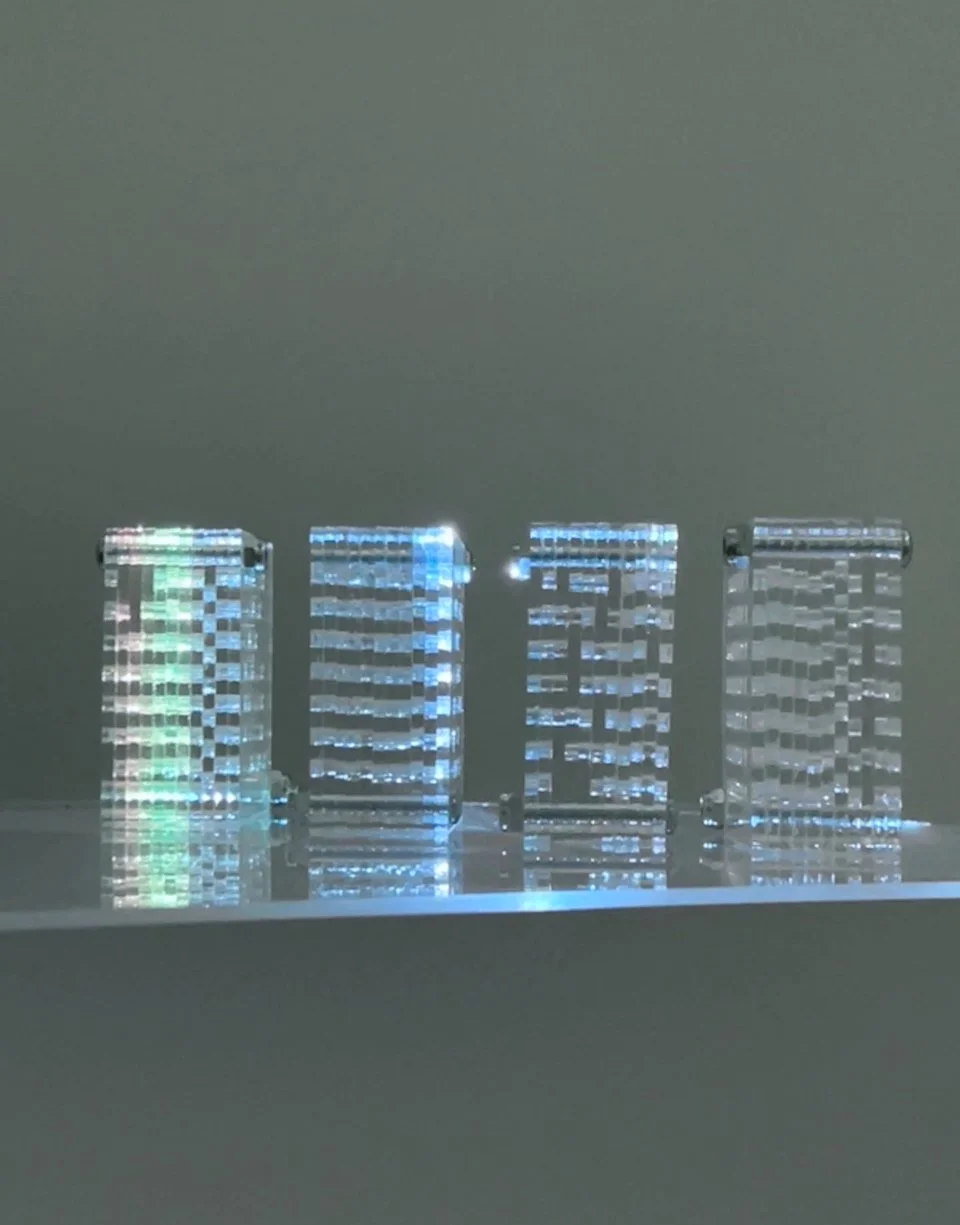
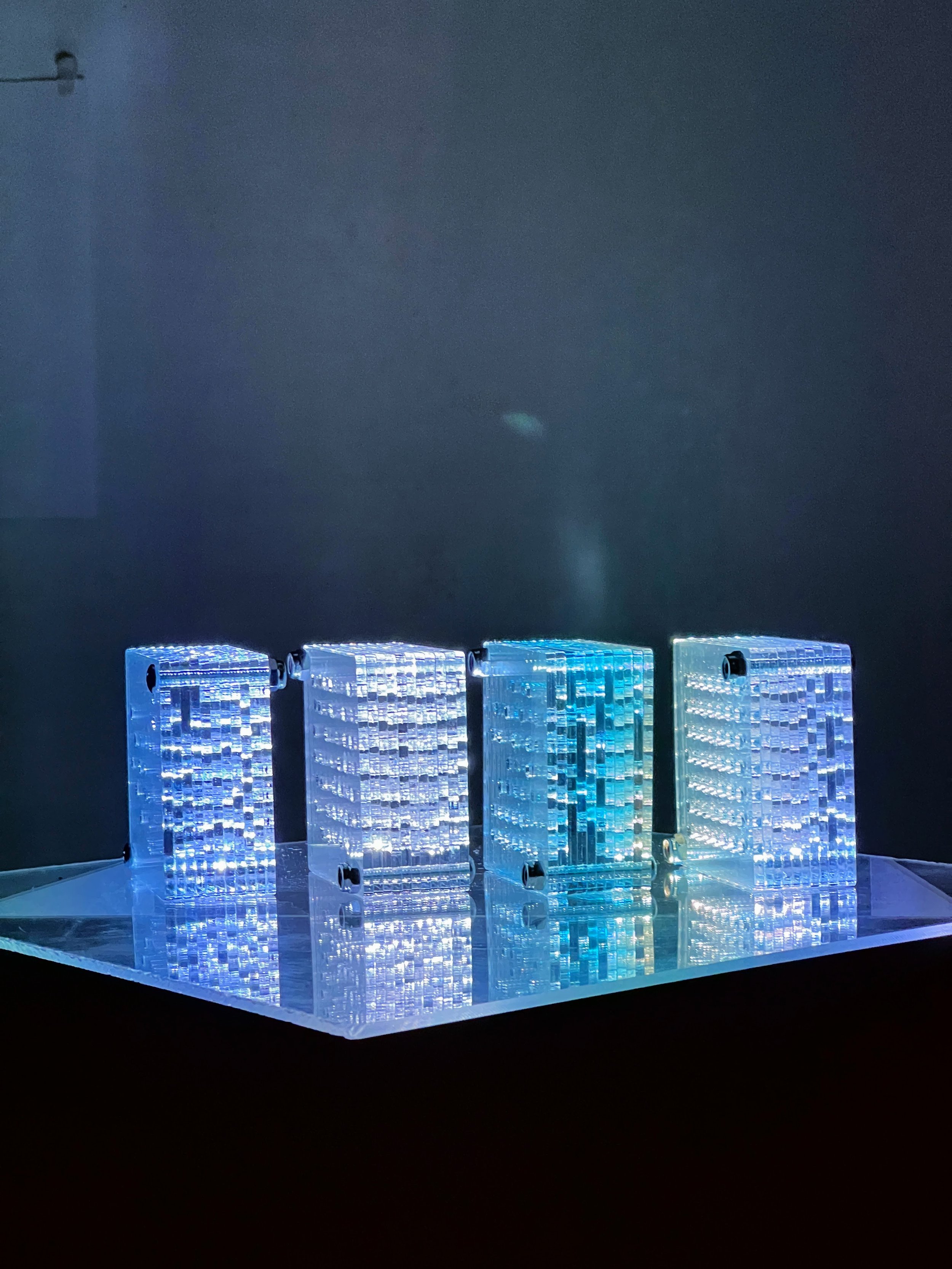
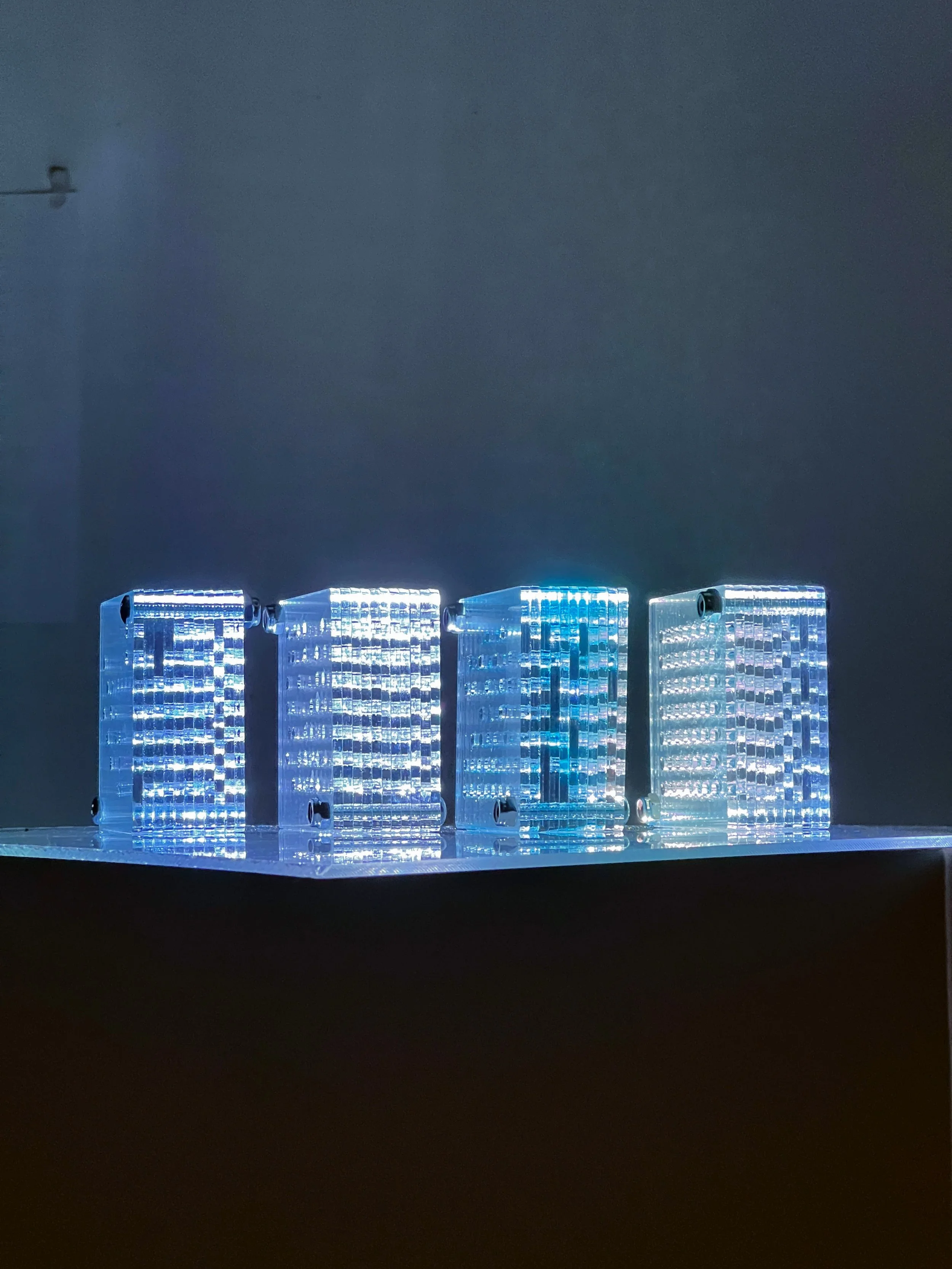
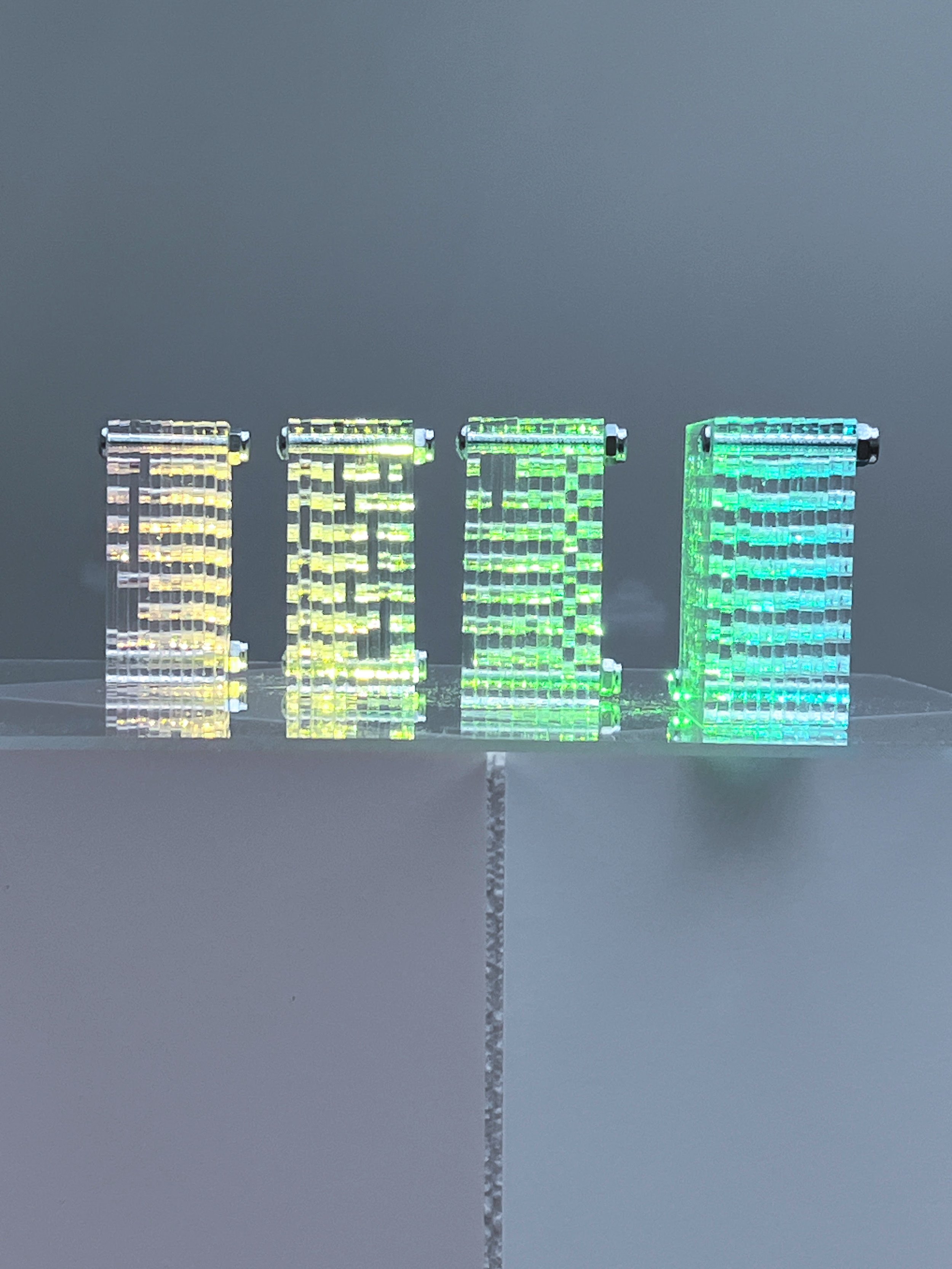
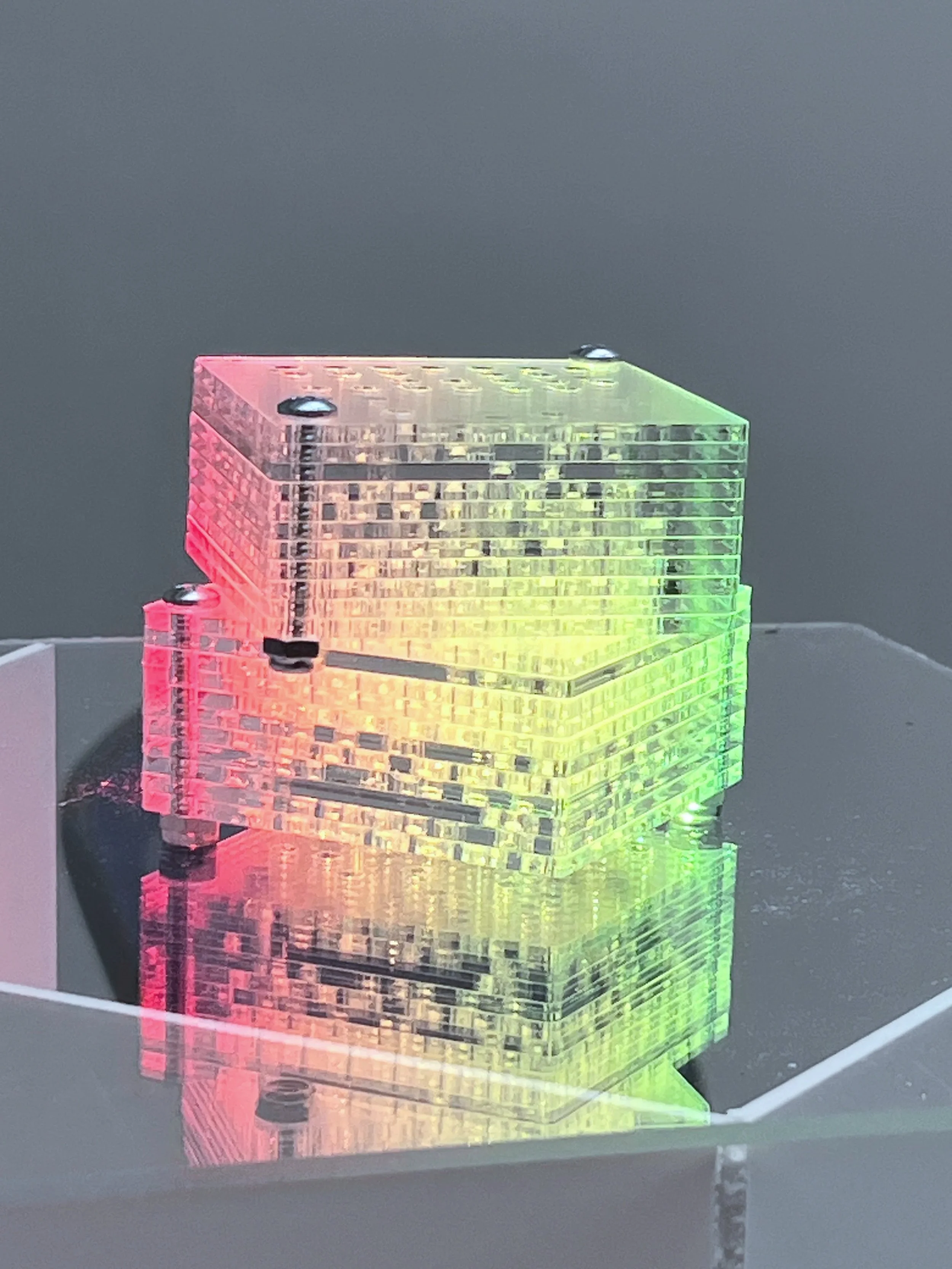
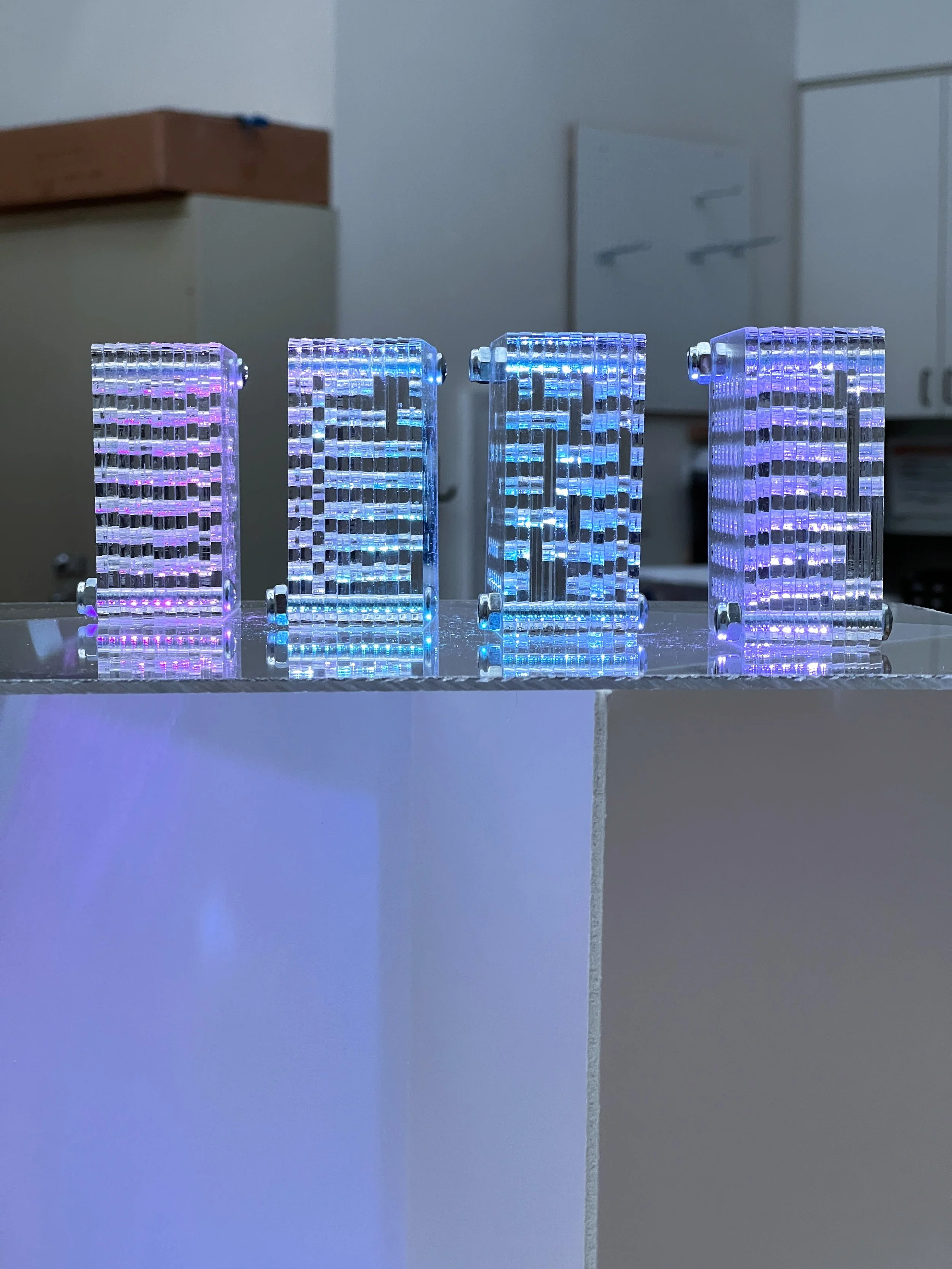
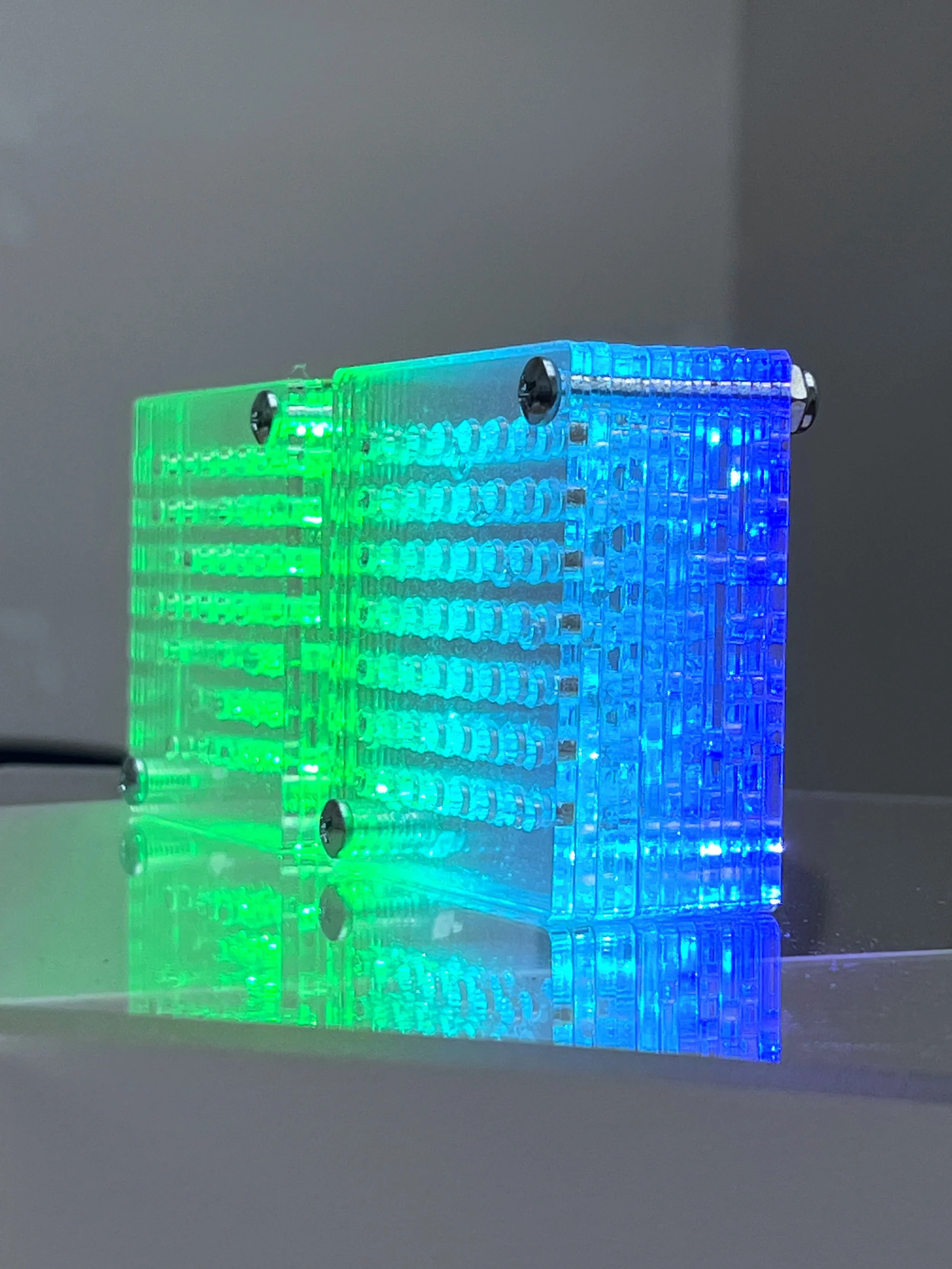
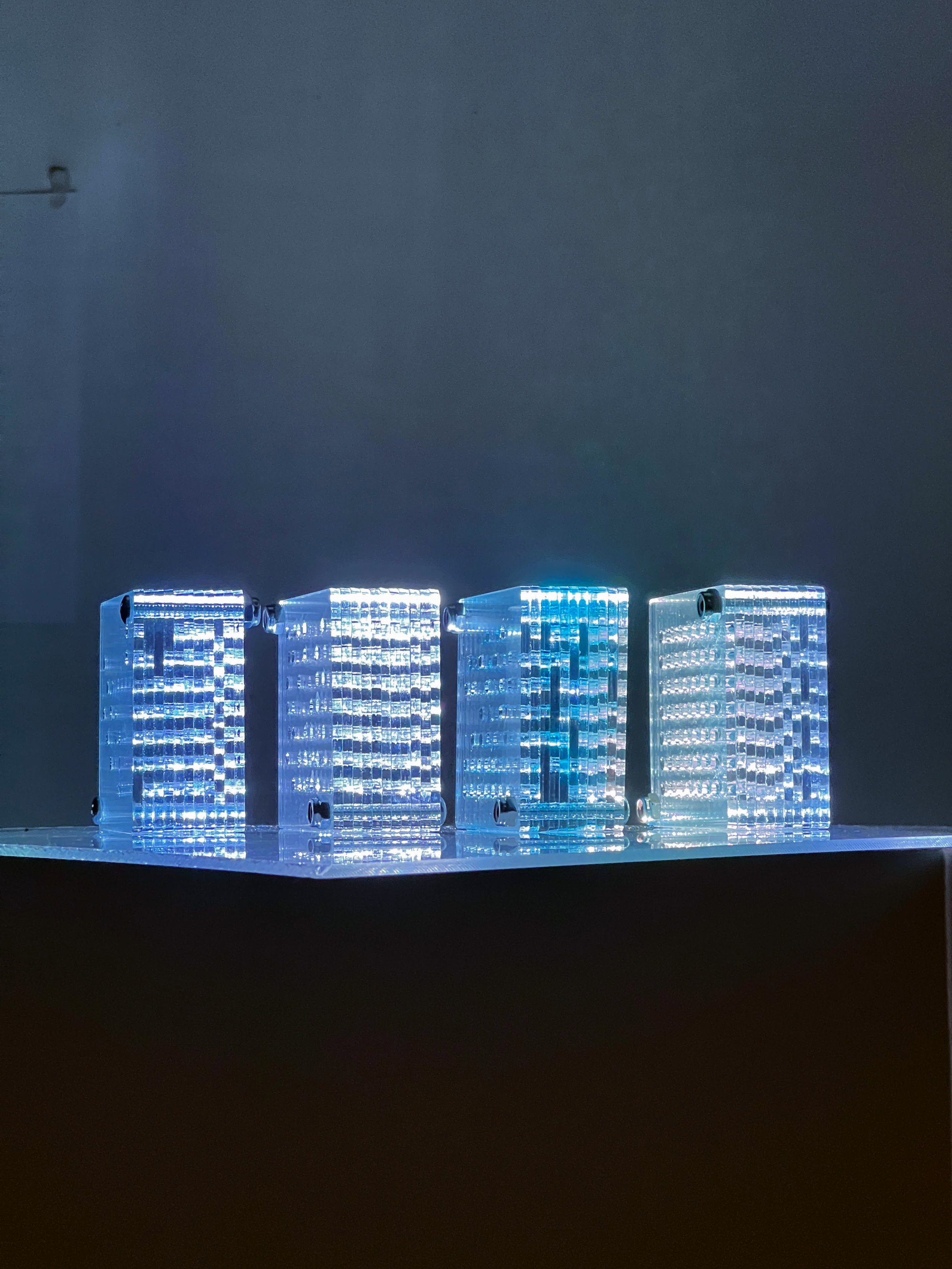
This time, memories are engraved onto acrylic squares. Each photograph is first converted into a binary string, and those bits are etched into the surface of the acrylic using a laser cutter. The squares are then layered and screwed together to form cubic “vessels” of memory.
These cubes stand in stark contrast to the original image on a screen. What was once a fluid, intangible moment is now an object you can hold: a weighty, solid block. Yet, like before, the memory within is utterly unrecognizable.
However, the memory is still there, preserved perfectly within the material. If one were to painstakingly compile the entire bitstring from each acrylic layer, they could reconstruct the original photo: a process that mirrors the fragility of digital preservation, now made physically inaccessible.
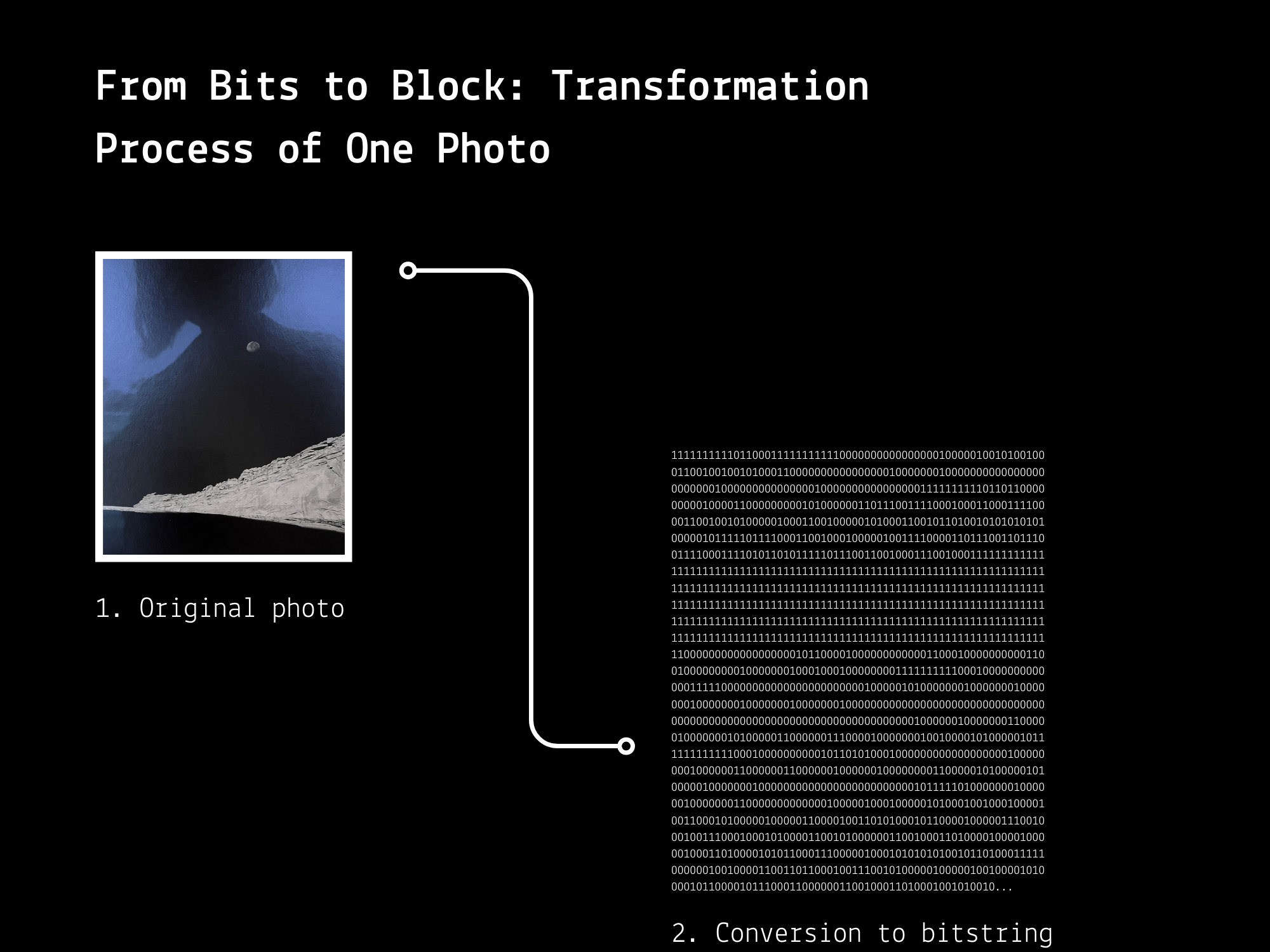
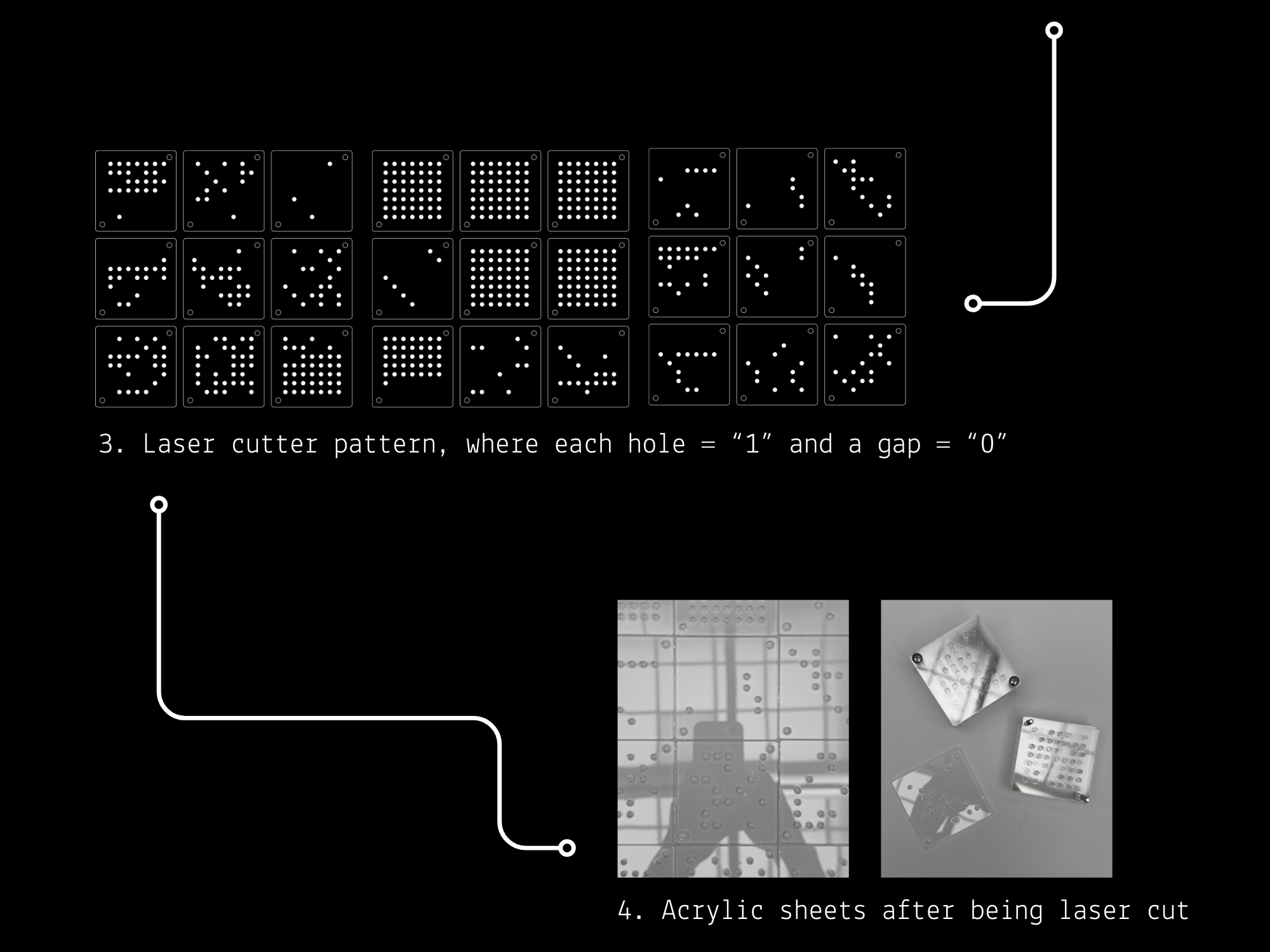
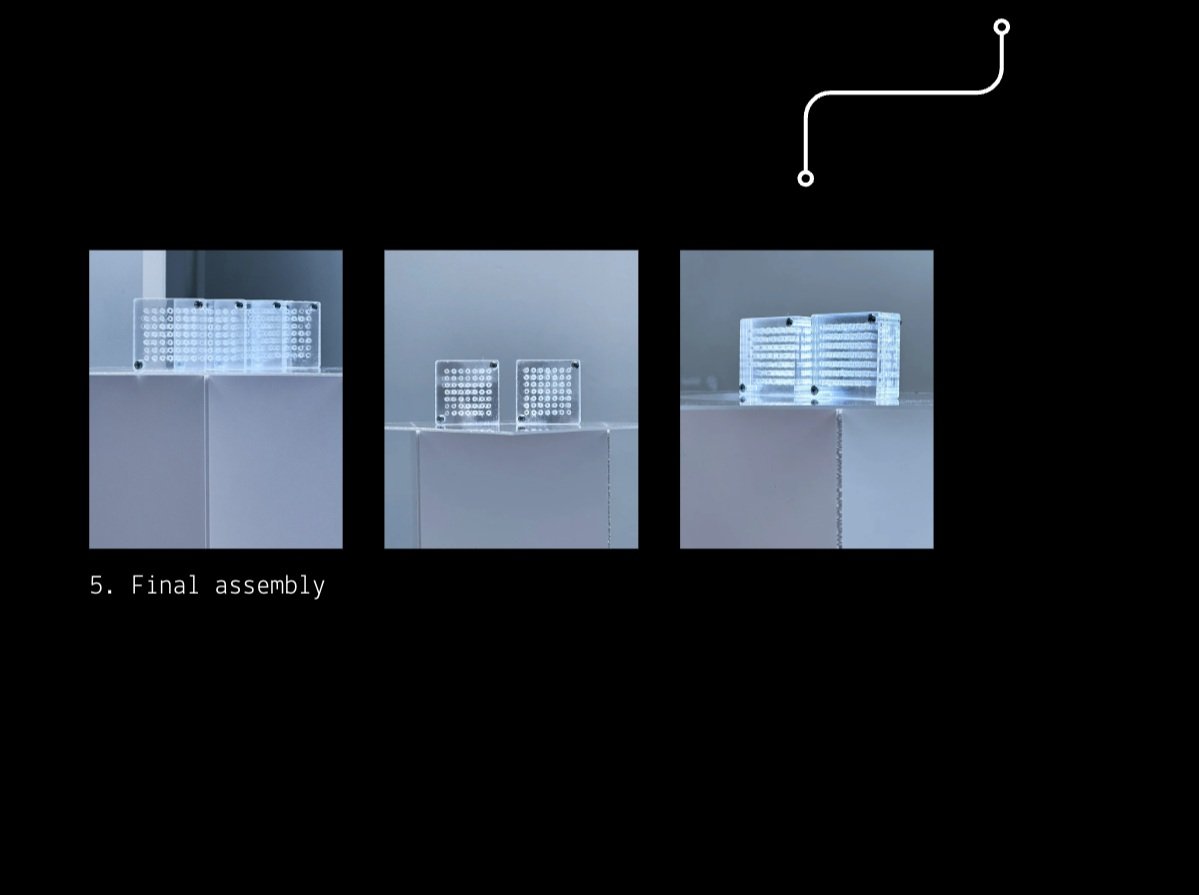
Below: Laser cutter pattern for assembling a single memory cube.
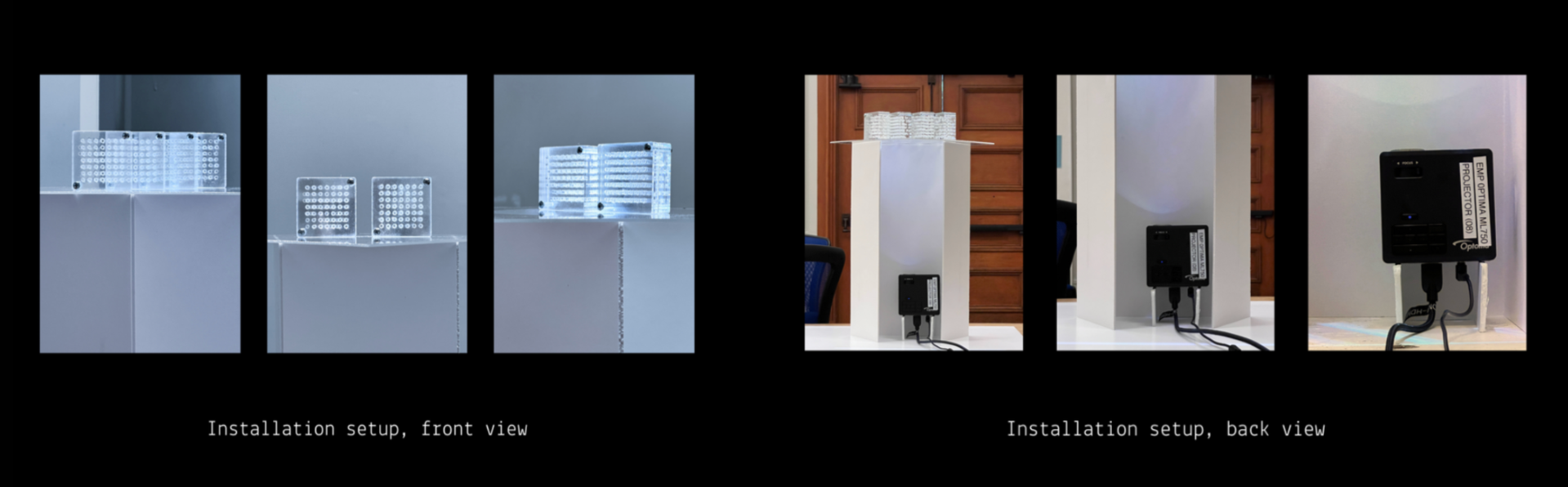
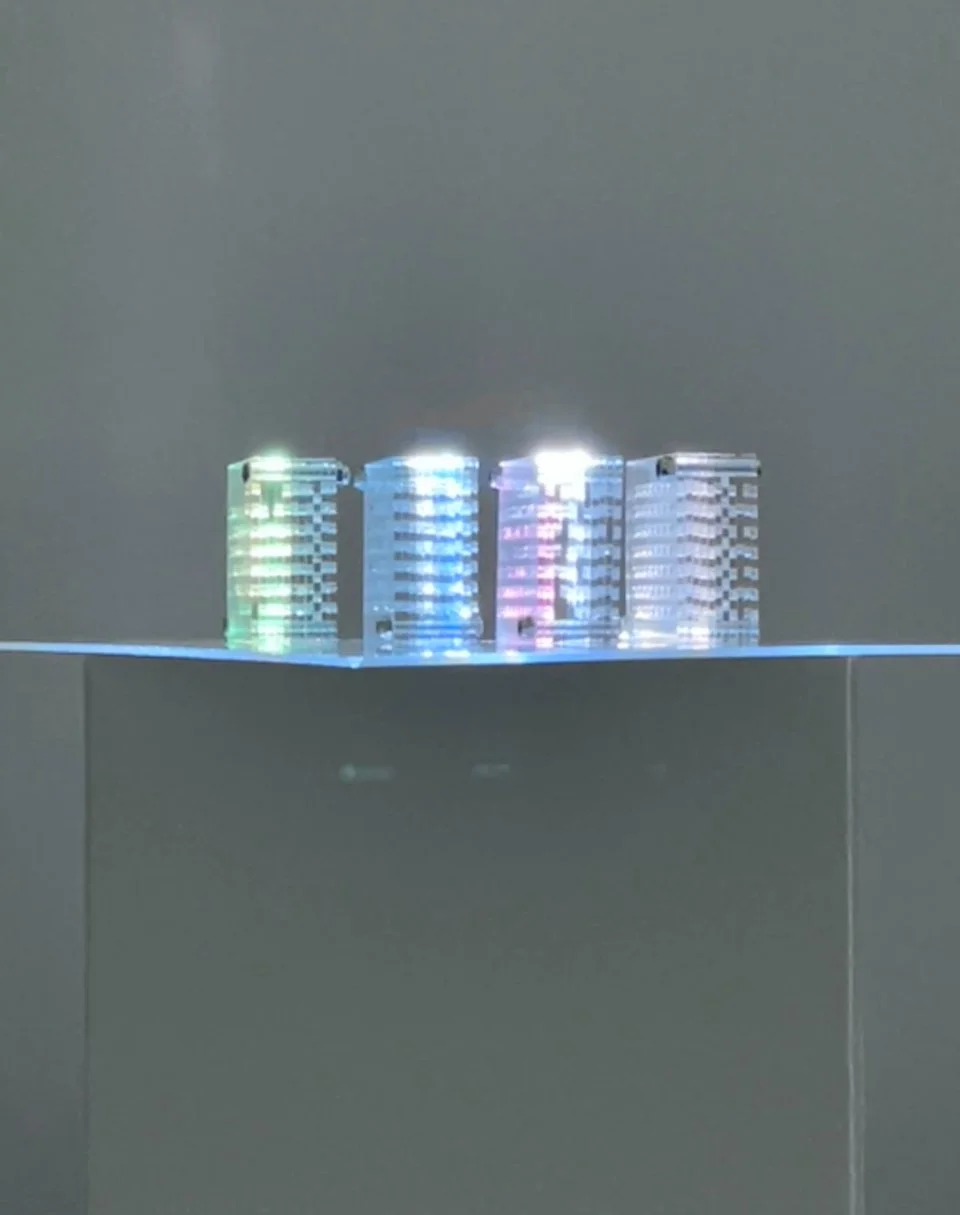
As part of the project installation, I wanted to emphasize the preciousness of these memories. I placed the cubes on a pedestal, shining a projector light underneath them. The light glints and dances through the layers, creating a shimmering effect, like diamonds on display. Memories, after all, are treasures, even when their form becomes unrecognizable.
In a final touch, I also projected a slideshow of the original, compressed photos across the cubes, using the colors and light to move through the layers, creating an interplay between the digital and the physical: a reminder that even though these memories are transformed, their essence remains.
Reflection
Even when their form becomes unrecognizable, memories are treasures.
Concept art
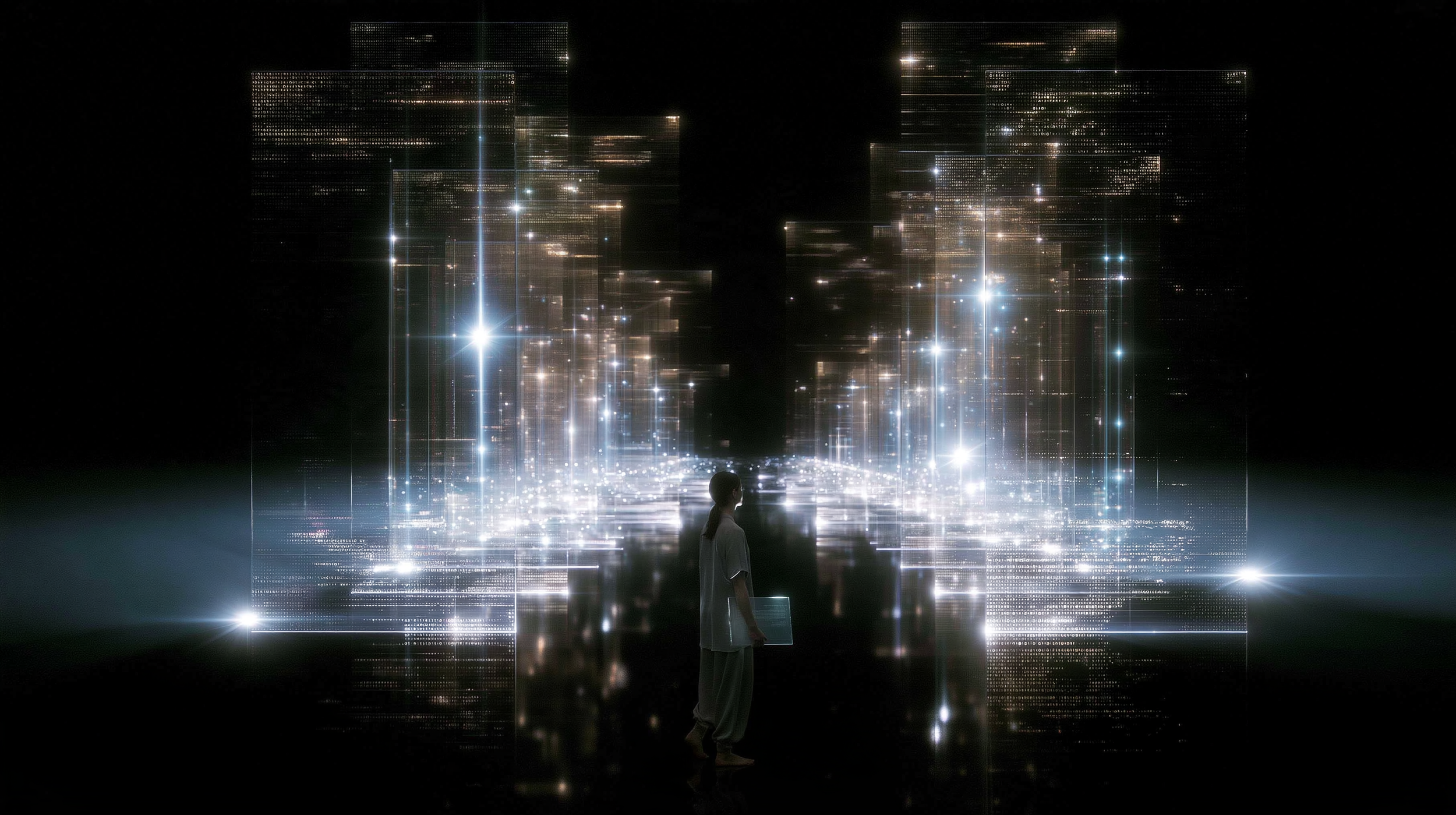
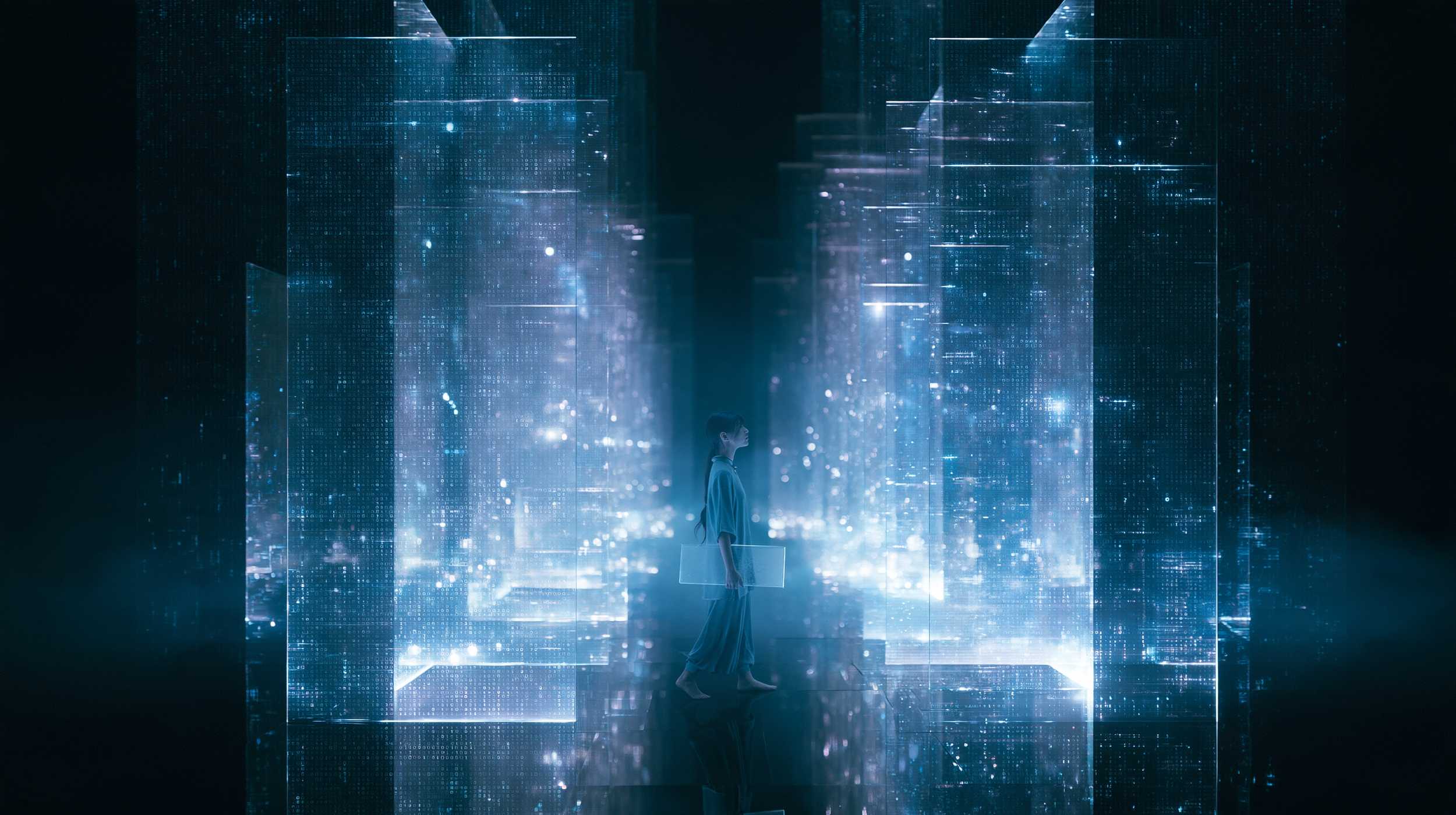
A hall of vessels, dreamed in light.
Each cube holds only a handful of memories. I wanted to see a hall of thousands. So I fed the vessels back into Midjourney and let it build the archive I never could: translucent towers glowing from within, memory turned solid and multiplied without end.