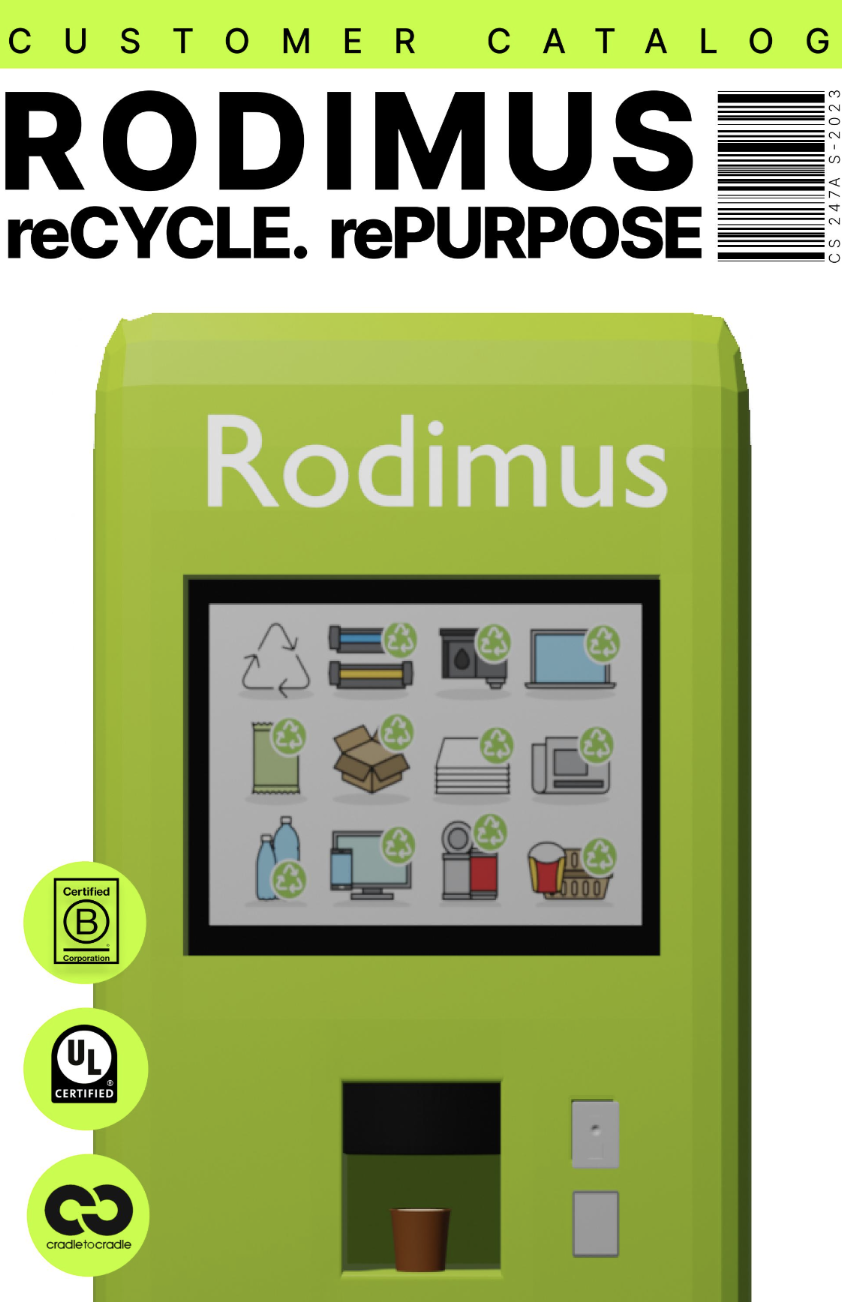
Stanford University · CS 247A · Design Fiction & Speculative Product
RODIMUS
An AI design journey into college students' trash disposal habits, and a fictional recycling system that turns guilt into curiosity.
FOCUS
Research, concept, design fiction
TEAM
Helen He, Caleb Robinson, Romuald Thomas
WHEN
April - May 2023
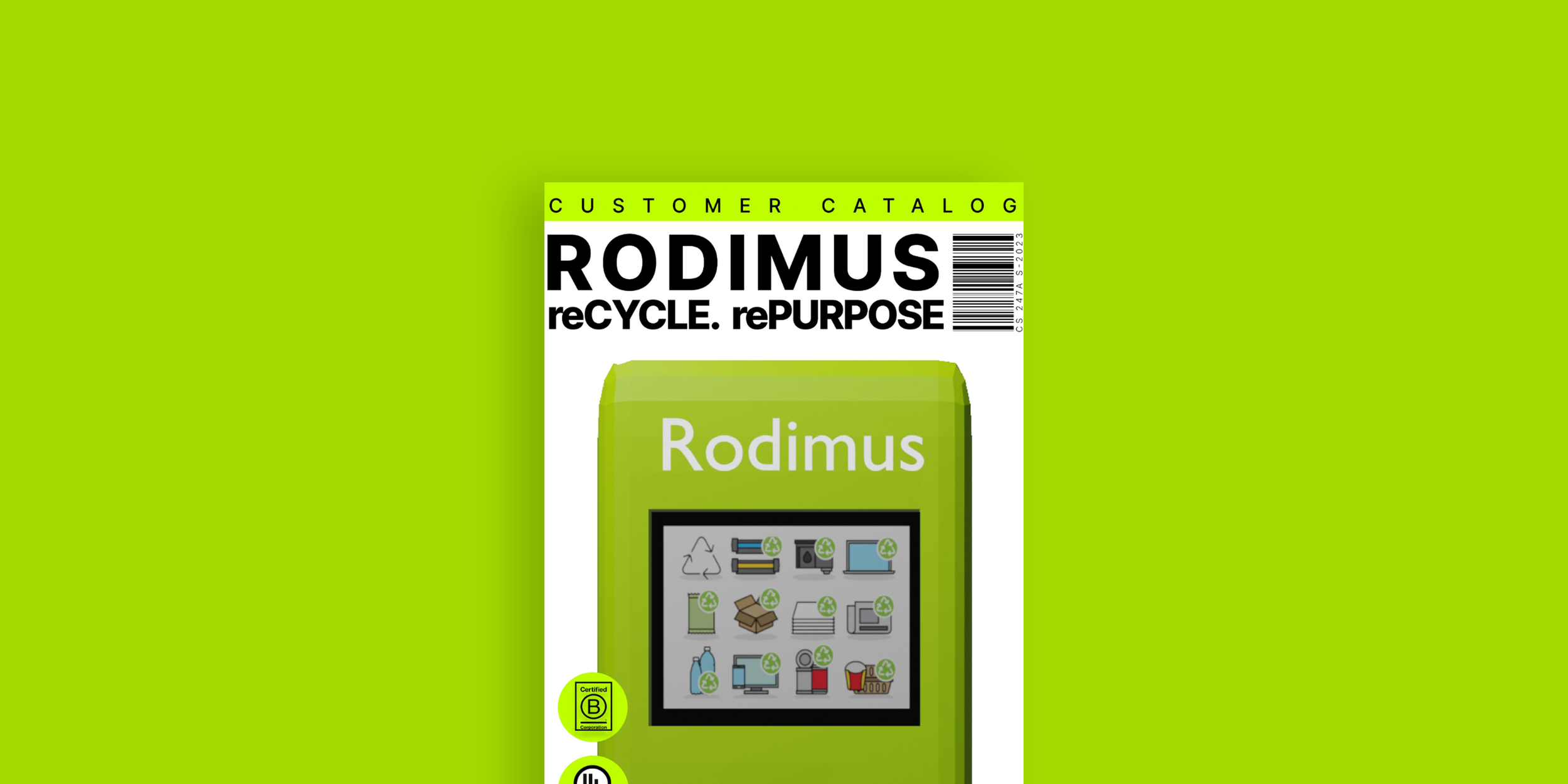
The complete speculative product catalog, published on Issuu.
01 — Research
Students wanted to sort trash correctly but lacked clarity, trust, and motivation.
For Stanford's CS 247A: Design for Artificial Intelligence, we studied how college students actually think about trash sorting: what they know, what they misunderstand, and why good intentions don't reliably turn into sorted bins. We began with a diary study, asking students to document what they threw away and which stream it went into: landfill, recycling, compost, or something else entirely.
Correct sorting was a mystery. People wanted to do it right but didn't know where things belonged.
Trust mattered. Some felt less motivated once they suspected recycling ended up in a landfill anyway.
It wasn't just about values. Effort, habit, culture, and belief in individual impact all played a role.
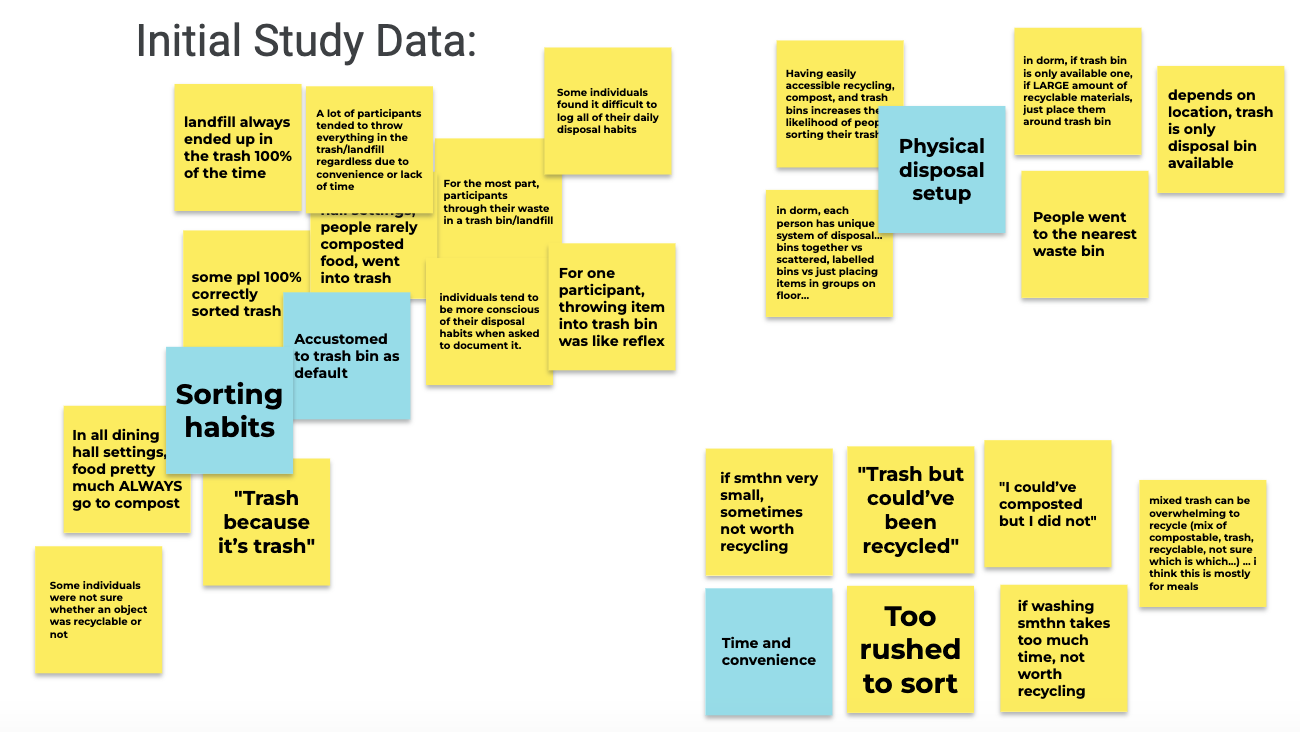

Groupings of interview findings.
"Trash sorting is not only an information problem. It is also a motivation and systems-trust problem."
02 — Ideation
We explored concepts that made disposal feel rewarding instead of guilt-driven.
Ideas ranged from playful feedback systems to self-sorting installations to AI assistants guiding disposal in real time. We were most drawn to concepts that changed the emotional experience of throwing something away: instead of guilt, what if the system helped people see discarded objects as material with future potential?
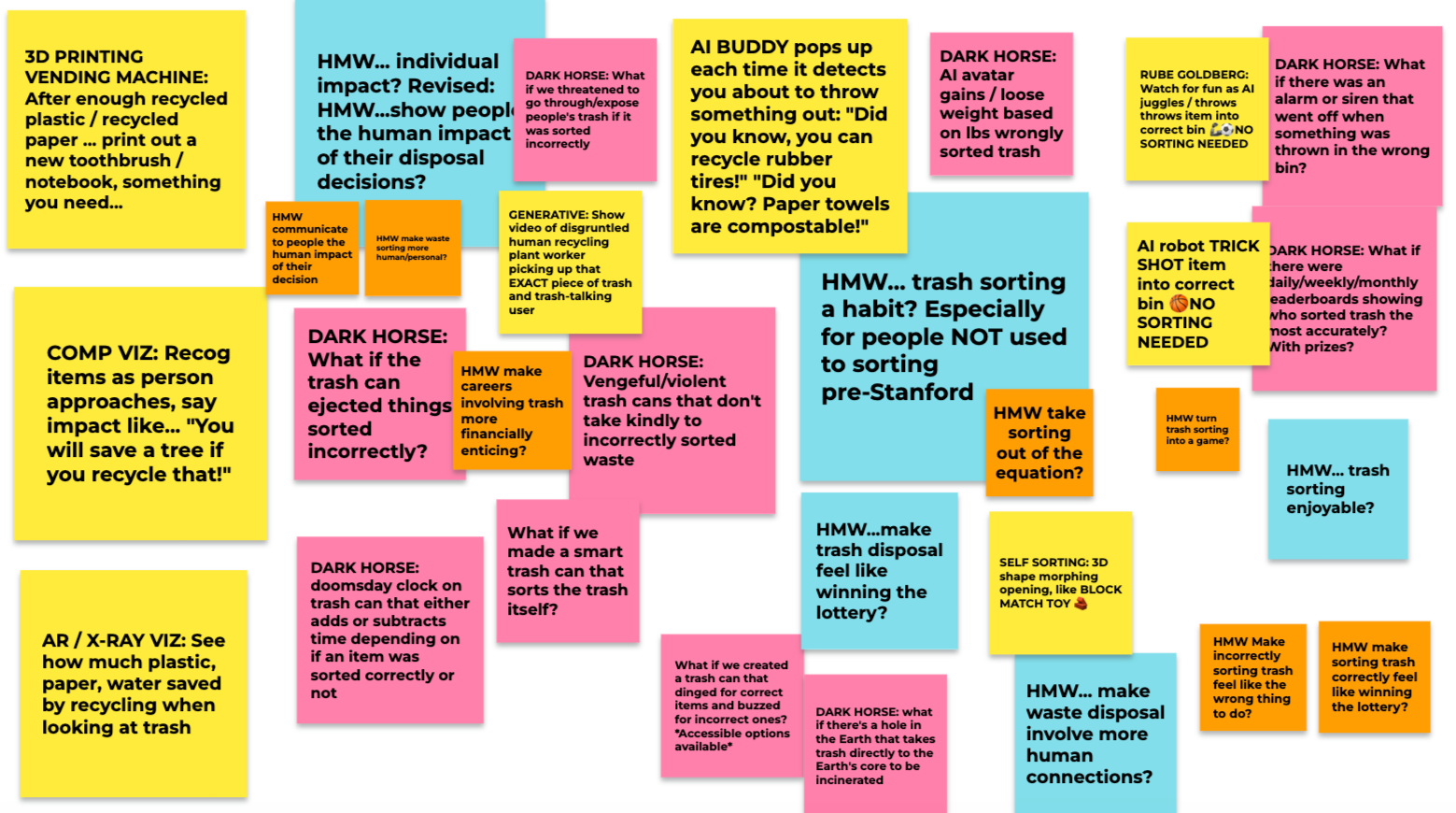
Brainstormed ideas
03 — Testing ideas
We ran small experiments to see how humor, stakes, and feedback shaped behavior.
To see how our ideas held up in the real world, we picked two and ran small-scale live experiments on campus.
EXP. 01
TRASH TALK
A talking trash can that literally talked trash when users sorted waste incorrectly: playful shame, humor, and immediate feedback made disposal mistakes harder to ignore.
EXP. 02
DOOMSDAY CLOCK
A trash-sorting installation framed as a countdown to Earth's doom. Correct disposal added time back; incorrect disposal took it away, turning every sorting decision into a visible stake.
04 — Final product
Rodimus is a fictional AI-powered recycling and 3D-printing system. Users place everyday trash into the machine, and Rodimus identifies, sorts, processes, and repurposes the material into something new. The final artifact was a design fiction product catalog: part speculative interface, part sustainability provocation, part playful catalog of things trash could become.
Rodimus imagines trash as creative material, not waste.